Today's
EarthStation1.com 15% (Or More!) Off Commemorative Memorial Title:
Archival Cartoon Classics #2 Mutt And Jeff History And More! MP4
DVD
Today, August 31, 2026
August 31: Eat Outside Day: -- Encourages
everyone to get some fresh air and enjoy the great outdoors whilst
enjoying a meal, too. Our earliest ancestors ate outside, so it's
no wonder we love to eat in the open air as they did. Whether you
want a luxurious al fresco dining experience or a simple, rustic
bite surrounded by nature, we've got some suggestions to make you
salivate over Eat Outside Day. The human race has always eaten
outside - in the early days, simply because there was no other
option! But the choice to dine outside dates back to the Medieval
period when men would fuel up with a hearty meal of bread, meat,
and cheese just before setting off for a hunt. In the centuries
that followed, eating outside continued to be associated with
hunting, when in the summer months the gentry would feast under
large tents on the spoils of the day's hunt. These would typically
be lavish occasions, recreating the banquet they might have had
inside, but in the open air. It was the French people who made
al-fresco dining an option for the masses when, following the
French Revolution in 1789, the former Royal Parks were opened to
the public, and people used them for socializing, bringing food to
share, and enjoying it together. At a similar time, pleasure
gardens were created in the U.S. These were private spaces where a
family could walk, play outdoor games, and enjoy a meal. These
were replicated by the Germans as their beer gardens and, in the
Prohibition era, they were made into tea gardens in the U.S. The
invention and later increasing affordability of the motorcar
enabled people to travel further afield to enjoy a day out in the
countryside, making picnics a highly popular way to socialize and
stay energized. Our enjoyment of good weather combined with good
food has also proven lucrative for restaurants, with al-fresco
dining, and homes, with outdoor spaces for BBQs.As we can't always
rely on the weather, we celebrate Eat Outside Day on August 31
when the weather should be at its best and we can celebrate the
history of food, socializing, and the great outdoors! On Sale
Until Midnight Tonight PT!
https://store.earthstation1.com/archival-cartoon-classics-2-mutt-and-jeff-history-and-more-mp4-d24.html
Today's
EarthStation1.com 15% (Or More!) Off Commemorative Memorial Title:
Warner-Pathe Newsreels Video Collection DVD, MP4 Download, USB
Stick
Today, August 31, 2026
August 31: National Zoo Awareness Day: --
Do you love zoos and wildlife as much as we do? Zoos are perfect
places to bond over a shared love for animals. Contrary to popular
perception, they're not just places for kids and families. We know
we've been to many a zoo with friends or even on a date. Being
around animals elevates any experience. We believe it can change
life perspectives altogether. National Zoo Awareness Day in the
U.K. celebrates zoos as spaces of learning and fun. When done
right, zoos can probably save the world. The history of zoos dates
back to the pharaohs of ancient Egypt. The intent, of course, was
different. Back then, many rulers kept exotic animals - to either
gift other rulers or for vanity's sake. There was little to no
effort in caring for the animals. Humans still lacked the
requisite knowledge or will. Over millennia, our understanding of
the animal kingdom evolved. We saw animal trainers and zookeepers
emerge. But the general idea of animals as exotic entertainment
persisted. Gradually, new knowledge and tools for caring for
animals became widespread; zoos and aquariums were born. Around
the same time, the idea of humans caring for wildlife first took
root and stayed. By the 19th century, zoology became a popular
field of science. Private animal collections were frowned upon,
becoming less and less popular over time. The modern zoo as we
know it today grew from this evolution of thought. Even so, not
all of them are the same. There are zoos open to the public, while
others are purely for conservation purposes. Many private zoos run
breeding programs to protect critically endangered species from
extinction. Other programs take in rescued animals that can no
longer survive in the wild for various reasons. As conscientious
citizens, we must critically examine the zoos in our areas. What
is the intent? Are there programs that benefit the animals and
conservation? Does the zoo educate the community on wildlife and
ecosystems? Are the animal enclosures mimicking natural habitats?
National Zoo Awareness Day hopes to instill fascination, love, and
respect for animals; particularly when they are in human care. On
Sale Until Midnight Tonight PT!
https://store.earthstation1.com/complete-warnerpathe-newsreels-collection-2-dual-layer-dvd-se2.html
Today's
EarthStation1.com 15% (Or More!) Off Commemorative Memorial Title:
Great Gildersleeve, Honest Harold The Homemaker MP3 DVD, Download,
USB
Today, August 31, 2026
August 31: National Matchmaker Day: --
The world feeds on a steady diet of love and romance, and today we
are honoring all those who bring people together. Held annually on
, this day raises a toast to the people who create happy endings
for others. Whether they are personally setting two people up,
arranging a match on behalf of the family, or coaching clients as
part of their professional services, we celebrate every kind of
matchmaker on this day. Matchmakers have existed probably since
the dawn of time. These early matchmakers were the parents and
elders (often women), who stepped in to ensure young people chose
the 'right' life partner. This decision was not left up to the
young people themselves, as it was considered too complicated a
decision for young people to handle themselves. This tradition
prevailed in most civilizations, from the Aztecs and the ancient
Greeks to the Chinese. The ancient Greek matchmakers - always
women, named the 'promnestria' - were the middlemen, passing
messages and negotiations between the two families. They also had
another important job; they reported their personal opinions about
the prospective spouses to the other side. This often influenced
the decisions, and the blame would fall on the promnestria's
taste. By the Victorian period, the matchmaking industry was
chugging along nicely. It was at this time that courtship and
matchmaking regulations gained new steam, and became more intense.
Marriageable women were to have a gigantic debutante ceremony,
called the 'coming out' ceremony, in court around Easter time.
They all wore white and carried delicate bouquets. They
participated in a 'season,' during which their mothers, and
sometimes fathers, would endeavor to make a match with an eligible
family. Matchmaking took on a new role in Britain by the 1600s;
parish vicars would match a person from their parish with another
of the same social class. The matchmaking process often found its
way into literature too, such as in Jane Austen's "Pride and
Prejudice" (the matchmaking mama), "Mulan" (the
snooty matchmaker), and "Fiddler On The Roof"
("Matchmaker, Make Me A Match"). As the world evolved
during and after the 20th century, so did the idea of matchmaking.
Now, arranged marriages were not the norm in some cultures, and
the concept of choosing one's own partner took root. More and more
people expanded their horizons when looking for a partner. And
then came the internet. Believe it or not, Tinder and Bumble were
not the very first experiments with merging science and
matchmaking. There have been attempts to automate this process
since the 1920s, and there have even been scientific tests
conducted on this topic. Jewelry company ArtCarved Bridal founded
this day to honor and thank all the matchmakers for their services
in finding and bringing two people together. On Sale Until
Midnight Tonight PT!
https://store.earthstation1.com/the-great-gildersleeve-amp-honest-harold-the-homemaker-otr-mp3-dv3.html
Today's
EarthStation1.com 15% (Or More!) Off Commemorative Memorial Title:
Automobile Accident & Drivers Education Films DVD, Download,
USB Drive
Today, August 31, 2026
August 31: World Stop Day: -- With the
slogan, "STOP when you have to stop", this event is here
to honor the important history of the stop sign and encourage
those who might simply need to put on the brakes of their life.
The date of observance for World Stop Sign Day was chosen because
Michigan became the first state to adopt the octagonal stop sign
as an official traffic signal on of August 31, 1914. Celebrated
for the first time in 2024, World Stop Sign Day has been founded
to show appreciation for the crucial role that stop signs have
been playing in traffic safety for more than a century. This event
was co-founded by two economists, Geza Mihalyi and Dr. Szabolcs
Imreh from Hungary. In addition to being a part of public road
systems worldwide, the vibe of STOP signs can be applied to many
different aspects of life, whether physically stopping to rest
when the body needs it or stopping a bad habit and replacing it
with a new one. Today helps to promote healthy boundaries, remind
humans of their natural limits, and work preventatively against
burnout. World Stop Sign Day can be part of all of these ideas and
more! On Sale Until Midnight Tonight PT!
https://store.earthstation1.com/automobile-accident-and-drivers-ed-films-3-dual-layer-dvd-se3.html
Today's
EarthStation1.com 15% (Or More!) Off Commemorative Memorial Title:
The Road To Brown: Battle Against Plessy v Ferguson DVD Download
USB
Today, August 31, 2026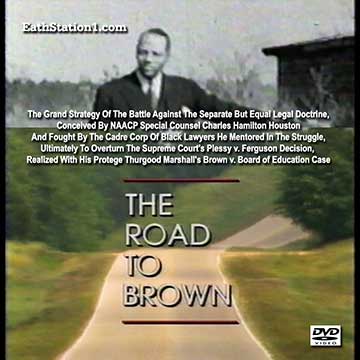
August 31: Love Litigating Lawyers Day:
-- A special day to show lawyers, especially litigation lawyers,
how much we appreciate them! Often, lawyers have a not-so-great
reputation for being heartless, and this day also works to change
this perception. The U.S. celebrates this day to remind everyone
that lawyers are people too and that they do important work. While
legal systems were established a long time ago, the legal
profession as we know it is a modern invention. The only known
legal specialist was the judge, and he was technically a part-time
specialist. In earlier times, only the kings, chiefs, or princes
of societies dispensed justice. The origins of law and lawyers
(again, not the modern version) show up in Greek history. Ancient
Greeks had orators who would plead a case for friends. At that
time, only individuals or their friends could plead their cases.
Also, these orators were not allowed to charge for their services.
While literature shows evidence that this law was broken multiple
times, the law itself was not abolished, making the lawyer trade
an informal profession. In ancient Rome, the case was much the
same - 'lawyers' practiced, but could not officially charge their
clients. This continued until Emperor Claudius (August 1, 10 B.C.
to October 13, 54 A.D.) abolished this law and legalized the legal
system. Now, people could charge a fee of up to 10,000 sesterces,
an ancient Roman currency, for their services. However, this fee
was considered to be too little pay, and lawyers were not able to
sustain a living with it. Historians attribute much of the
development of the early legal system to the Ancient Romans. The
legal profession had collapsed by the time the medieval period
rolled around. A resurgence saw many lawyers work with the church
exclusively. When British colonies settled in America, the people
did not warm up to the idea of lawyers. Some colonies even
outlawed this profession, and in places where lawyers were allowed
to practice, their work and fees were strictly regulated. However,
there was usually no special training or requirements for people
to become lawyers. This situation changed in 1761. This year, the
Bill of Rights was ratified, and this gave people in the U.S. the
right to legal representation. Soon after, lawyers were required
to have at least seven years of training before they could
practice law. A code of professional ethics followed, and
gradually, the negative perception that dogged this occupation
began to change. Over the next decade, many small law schools were
set up by lawyers across the U.S. The very first law degree, the
Bachelor of Law, was granted by the College of William and Mary in
1793. This degree was called an L.B., and it eventually became an
L.L.B. Law schools like these paved the way for future lawyers to
get an education easily. On Sale Until Midnight Tonight PT!
https://store.earthstation1.com/the-road-to-brown-battle-against-plessy-v-ferguson-dvd-download-usb.html
Today's
EarthStation1.com 15% (Or More!) Off Commemorative Memorial Title:
Anais Observed: A Portrait Of A Woman As Artist DVD, MP4, USB
Drive
Today, August 31, 2026
August 31: We Love Memoirs Day: -- A memoir is a non-fiction account based on the author's memories and experiences. They focus on how these events and experiences affected the author. This ranges from emotional responses to their personal opinions on the affairs going on at the time. For millennia, notable historical figures penned memoirs documenting what they considered some of the most formative years of their lives. From war journals and politics to business and travel, you can write a memoir about anything. Memoirs offer us a rare peek into a person's life and beliefs. For as long as humans have written, there have been memoirs. In the past documenting one's life in scrolls, journals, and letters was a part of everyday life. Scholars, politicians, and military officers were the most common memoirists, as well as a few royals and their associates. Some memoirs existed in the form of oral literature - passed down from generation to generation as part of a family's heritage. One example is Libanius - a teacher who lived between 314 and 394 A.D. Libanius chose to have his memoir done in the literary orations that were popular at the time. During the 13th and 14th centuries, some European diplomats like Philippe de Commines and historians like Geoffrey of Villehardouin wrote about great political upheavals at the time, narrated from their perspective. In the 17th and 18th centuries, also known as the Age of Enlightenment, many intellectuals began writing memoirs. They wrote these accounts as a way of recording their exploits during this time, such as in political movements and intellectual schools of thought. Most of these memoirs were written by esteemed members of certain professions such as law and politics. It wasn't until the 20th century that ordinary men and women began publishing memoirs for others to read. After the First and Second World Wars, veterans who survived these conflicts began writing about the horrors they experienced on the frontlines. These accounts showed people the harsh reality of war and how brutal it was when countries engaged in sustained conflict against each other. Memoirs like "Her Privates We" and "Storm of Steel" stripped away the outdated notions of war as a noble pursuit. Today, memoirs are still written by career politicians, businesspeople, and military officers, however, a large chunk of the market is dominated by celebrities too. On Sale Until Midnight Tonight PT! https://store.earthstation1.com/anais-nin-observed-19741974.html
Today's
EarthStation1.com 15% (Or More!) Off Commemorative Memorial Title:
American Anti-Drug Films & Broadcasts Set MP4 Video Download 2
DVD Set
Today, August 31, 2026
August 31: International Overdose
Awareness Day: -- A stark reminder of the harm that drugs inflict
on our society. It is a day to remember those who have fallen
victims to overdose as well as those who have come out of the dark
hole victorious with the help of loved ones and ask whether the
War on Drugs has been effective. International Overdose Awareness
Day also aims to reduce the stigma attached to the issue, most of
which is faced by the families of the victims. Many who are not
aware of the factors behind overdose unfairly blame victims. Such
an attitude only works to flair the negativities surrounding the
topic, suppressing any efforts to raise awareness. August 31 is
the day to come out and stand in solidarity in order to reduce
future overdose deaths. The first International Overdose Awareness
Day was commemorated 20 years ago. It was started by Sally J. Finn
who was in St. Kilda, Melbourne at The Salvation Army. In the
beginning, she gave this suggestion to her friend Peter Streker,
who worked at the Community and Health Development Program in
Australia. Both Finn and Streker wanted to highlight the
consequences people face when someone close to them overdoses,
resulting in either a critical state or death. Another objective
was to attempt to reduce the apathy and stigma the general public
had towards the overdose victims. Since its inception in 2001, the
day has been noted by governments and official organizations.
Special events and kits are prepared every year to welcome the day
and achieve the goals related to it. Overdose is described as
taking too much of a substance, and in this case, the overdose is
related to drugs. Overdosing on drugs can be deliberate or
otherwise. People deliberately overdosing on drugs may do it due
to suicidal tendencies, mental illnesses, or looking to achieve
higher levels of intoxication. On the other hand, people, who
overdose on drugs by mistake, may do so because of incorrect
measurements. Whatever the case may be, the resulting consequences
are faced by the people who are close to the victims. These
effects are felt on socio-economic levels. The prejudice and
stigma surrounding the topic make it hard for families and friends
to overcome their grief. This also, inevitably, results in less
awareness. What we as a society can do is talk about the overdose
more openly, support people in their struggles, and continue to
fight. Even if one person is saved at the end of the day, it is a
victory to be celebrated. On Sale Until Midnight Tonight PT!
https://store.earthstation1.com/classic-american-antidrug-films-2-dual-layer-dvd-se3.html
Today's
EarthStation1.com 15% (Or More!) Off Commemorative Memorial Title:
Black Civil Rights Films: African-American History DVD, MP4, USB
Stick
Today, August 31, 2026
August 31: International Day For People
Of African Descent: -- This holiday was created by the United
Nations to celebrate the diverse heritage and several
contributions of people of African descent. The African diaspora
has long been recognized for its spirit and contributions to art,
culture, science, and other fields, and it continues to mark a
distinctive presence and positive impact in several parts of the
world. On this day, we honor a vibrant culture and an
international community while celebrating their values and
contributions. The International Day for People of African Descent
was created only recently by the United Nations and is set to be
celebrated internationally for the first time this year. This
first observance comes in the midterm of the International Decade
for People of African Descent, another U.N. initiative. This has
largely influenced the creation of this holiday. According to the
U.N., 2020 marked the year of a significant change in the way
issues of discrimination and marginalization against people of
African descent are addressed on a global scale. Over the last few
decades, several efforts have been made to shed light on issues
affecting African communities and people of African descent
worldwide, as well as efforts to improve the situation for many of
these communities. This holiday also commemorates the numerous
contributions of people of African Descent. From art and
literature to science and research, the African diaspora has had a
significant positive impact. African communities, in all their
richness and diversity, have left their mark on many parts of the
world. According to the UN, there are approximately 200 million
people in the Americas who identify as being of African descent.
In commemoration of this day, the U.N. hopes to further enable the
pillars of the International Decade for People of African Descent;
recognition, justice, and development. This celebration also aims
to provide an opportunity for people to learn more about African
heritage and culture through film, dance, music, and art
presentations organized on the holiday, as well as other
manifestations of political and scientific contributions of people
of African descent. On Sale Until Midnight Tonight PT!
https://store.earthstation1.com/black-civil-rights-films-africanamerican-history-dvd.html
Today's
EarthStation1.com 15% (Or More!) Off Commemorative Memorial Title:
Thomas A. Edison: The Wizard Of Menlo Park + 3 Bonus Titles MP4
DVD
Today, August 31, 2026
August 31, 1897: Great Inventions: Motion
Pictures: Precursors Of Film (Precinema): Motion Picture Viewers:
The Kinetoscope: -- Thomas Edison patents the Kinetoscope, the
first movie projector. The Kinetoscope is an early motion picture
exhibition device. The Kinetoscope was designed for films to be
viewed by one individual at a time through a peephole viewer
window at the top of the device. The Kinetoscope was not a movie
projector as such, but introduced the basic approach that would
become the standard for all cinematic projection before the advent
of video, by creating the illusion of movement by conveying a
strip of perforated film bearing sequential images over a light
source with a high-speed shutter. A process using roll film first
described in a patent application submitted in France and the U.S.
by French inventor Louis Le Prince, the concept was also used by
U.S. inventor Thomas Edison in 1889, and subsequently developed by
his employee William Kennedy Laurie Dickson between 1889 and 1892.
Dickson and his team at the Edison lab also devised the
Kinetograph, an innovative motion picture camera with rapid
intermittent, or stop-and-go, film movement, to photograph movies
for in-house experiments and, eventually, commercial Kinetoscope
presentations. A prototype for the Kinetoscope was shown to a
convention of the National Federation of Women's Clubs on May 20,
1891. The first public demonstration of the Kinetoscope was held
at the Brooklyn Institute of Arts and Sciences on May 9, 1893.
Instrumental to the birth of American movie culture, the
Kinetoscope also had a major impact in Europe; its influence
abroad was magnified by Edison's decision not to seek
international patents on the device, facilitating numerous
imitations of and improvements on the technology. In 1895, Edison
introduced the Kinetophone, which joined the Kinetoscope with a
cylinder phonograph. Film projection, which Edison initially
disdained as financially nonviable, soon superseded the
Kinetoscope's individual exhibition model. Many of the projection
systems developed by Edison's firm in later years would use the
Kinetoscope name. On Sale Until Midnight Tonight PT!
https://store.earthstation1.com/thomas-a-edison-the-wizard-of-menlo-park-dvd.html
Today's
EarthStation1.com 15% (Or More!) Off Commemorative Memorial Title:
The Struggles For Poland TV Series + Bonus MP4 Video Download DVD
Set
Today, August 31, 2026
August 31-September 2, 1920: The
Aftermath Of World War I: 20th Century Revolutions: The
Revolutions Of 1917-1923: The Interwar Period (The Interbellum,
Between The Wars): The Russian Revolution: The Russian Civil War:
The Western Front Of The Russian Civil War (Western Front
(RSFSR)): The Ukrainian War Of Independence (The Ukrainian-Soviet
War): The Lithuanian Wars Of Independence, The Freedom Struggles):
The Latvian War Of Independence (Latvia's Freedom Battles, The
Latvian War Of Liberation): The Polish-Soviet War: The Battle Of
Komarow (The Battle Of Zamosc Ring): -- The last great battle of
any significance in which cavalry was used as such and not as
mounted infantry, and one of the largest cavalry battles since
1813, ends in a decisive Polish victory and a disaster for the
Soviet 1st Cavalry Army, which sustained heavy casualties and
barely avoided being surrounded and destroyed. After the battle,
the morale of the 1st Cavalry Army collapsed, and it no longer
remained an effective fighting force. On Sale Until Midnight
Tonight PT!
https://store.earthstation1.com/the-struggles-for-poland-dvd-set-all-9-shows-5-dis95.html
Today's
EarthStation1.com 15% (Or More!) Off Commemorative Memorial Title:
The Road To War: Years Between WWI & WWII TV Series DVD,
Download, USB
Today, August 31, 2026
August 31, 1939: The European Civil War:
World War II: The Second European War (The European Theater Of
World War II): The Invasion Of Poland (The September Campaign, The
Polish Campaign, The War Of Poland Of 1939, The Polish Defensive
War Of 1939): False Flag Attacks: Operation Himmler (Operation
Konserve): The Gleiwitz Incident (German: Uberfall Auf Den Sender
Gleiwitz; Polish: Prowokacja Gliwicka) (The Gleiwitz Transmitter
False Flag Attack [The Sender Gleiwitz False Flag Attack]): --
Nazi Germany mounts a nighttime a false flag attack on the German
radio station Sender Gleiwitz in Gleiwitz, Germany (today Gliwice,
Poland;), staged by the German secret police, devised by Reinhard
Heydrich under orders from Hitler, to serve as a pretext for Nazi
Germany to invade Poland. Adolf Hitler invaded Poland the very
next morning after a lengthy period of preparations, thus sparking
the Second World War in Europe. The Gleiwitz incident is the
best-known action of Operation Himmler, a series of special
operations undertaken by the Schutzstaffel (SS) to serve Nazi
German propaganda at the outbreak of war. They were intended to
create the appearance of Polish aggression against Germany in
order to justify the subsequent Invasion Of Poland. During
Hitler's declaration of war, he did not mention Gleiwitz incident
by name, but grouped all provocations staged by the SS as an
alleged Polish assault on Germany. The evidence for the Gleiwitz
attack having been a false flag operation by the SS was provided
by the German SS officer, Alfred Naujocks in 1945. The radio
station's historic Gliwice Radio Tower is currently the tallest
wooden structure in Europe. On Sale Until Midnight Tonight PT!
https://store.earthstation1.com/the-road-to-war-dvd-set-all-8-tv-shows-4-dis84.html
Today's
EarthStation1.com 15% (Or More!) Off Commemorative Memorial Title:
The Monarchy: British Royal Family History TV Series DVD MP4 USB
Drive
Today, August 31, 2026
August 31, 1997: #DOTD: #RIP: Death Of
Diana, Princess Of Wales: In the early hours of August 31, 1997,
Diana, Princess of Wales died in hospital after being injured in a
motor vehicle accident in a road tunnel in Paris. Her partner,
Dodi Fayed, and the driver of the Mercedes-Benz W140, Henri Paul,
were pronounced dead at the scene. Their bodyguard, Trevor
Rees-Jones, survived with serious injuries. Some media claimed the
erratic behaviour of paparazzi following the car, as reported by
the BBC, had contributed to the crash. In 1999, a French
investigation found that Paul, who lost control of the vehicle at
high speed while intoxicated and under the effects of prescription
drugs, was solely responsible for the crash. He was the deputy
head of security at the Hotel Ritz and had earlier goaded
paparazzi waiting for Diana and Fayed outside the hotel.
Anti-depressants and traces of an anti-psychotic in his blood may
have worsened Paul's inebriation. No evidence was found that
paparazzi were near the car when it crashed. In 2008, the jury at
a British inquest returned a verdict of unlawful killing through
grossly negligent driving by Paul and following vehicles. It was
also found that none of the occupants of the car were wearing a
seat belt. Diana was 36 years old when she died. Her death caused
an unprecedented outpouring of public grief in the United Kingdom
and worldwide, and her funeral was watched by an estimated 2.5
billion people. She is buried on a small tree-covered island in
the middle of the ornamental Round Oval lake at her family home of
Althorp House in the civil parish of Althorp, West
Northamptonshire, England. Her legacy has had a deep impact on the
royal family and British society. The Royal Family were criticised
in the press for their reaction to Diana's death. Public interest
in Diana has remained high and she has retained regular press
coverage in the years after her death. Diana, Princess of Wales
(d. 1997) was born Diana Frances Spencer. A member of the British
royal family, she was the first wife of Charles, Prince Of Wales,
the heir apparent to the British throne, and the mother of Prince
William and Prince Harry. Diana's activism and glamour made her an
international icon and earned her an enduring popularity as well
as an unprecedented public scrutiny, exacerbated by her tumultuous
private life. Diana was born into the British nobility and grew up
close to the royal family on their Sandringham estate. The
youngest daughter of John Spencer, 8th Earl Spencer, and Frances
Shand Kydd, she was strongly affected by their divorce in 1967.
She did not distinguish herself academically, but was talented in
music, dance, and sports. In 1978, she moved to London, where she
lived with flatmates and took on various low-paying jobs. Diana
came to prominence in 1981 upon her engagement to Prince Charles,
the eldest son of Queen Elizabeth II, after a brief courtship.
Their wedding took place at St Paul's Cathedral in 1981 and made
her Princess of Wales, a role in which she was enthusiastically
received by the public. The couple had two sons, the princes
William and Harry, who were then second and third in the line of
succession to the British throne. Diana's marriage to Charles,
however, suffered due to their incompatibility and extramarital
affairs. The couple separated in 1992, soon after the breakdown of
their relationship became public knowledge. The details of their
marital difficulties became increasingly publicised, and the
marriage ended in divorce in 1996. As Princess of Wales, Diana
undertook royal duties on behalf of the Queen and represented her
at functions across the Commonwealth realms. She was celebrated in
the media for her unconventional approach to charity work. Her
patronages initially centered on children and youth but she later
became known for her involvement with AIDS patients and campaign
for the removal of landmines. She also raised awareness and
advocated ways to help people affected with cancer and mental
illness. As princess, Diana was initially noted for her shyness,
but her charisma and friendliness endeared her to the public and
helped her reputation survive the acrimonious collapse of her
marriage. Considered to be very photogenic, she was a leader of
fashion in the 1980s and 1990s. Media attention and public
mourning were extensive after her death in a car crash in a Paris
tunnel in 1997 and subsequent televised funeral. Her legacy has
had a deep impact on the royal family and British society. Emad
El-Din Mohamed Abdel Mena'em Fayed (April 15, 1955 - August 31,
1997), better known as Dodi Fayed, was an Egyptian film producer
and the son of billionaire Mohamed El Fayed. He was the romantic
partner of Diana, Princess of Wales, when they both died in a car
crash in Paris in 1997. On Sale Until Midnight Tonight PT!
https://store.earthstation1.com/the-monarchy-3-part-british-royal-family-tv-series-dvd-mp4-u34.html
Today's
EarthStation1.com 15% (Or More!) Off Commemorative Memorial Title:
World War II: The War Years 17 Part TV Series MP4 Video Download
DVD
Today, August 31, 2026
August 31, 1941: The European Civil War:
World War II: The Second European War (The European Theater Of
World War II): The Mediterranean And Middle East Theater Of World
War II: The Anglo-Soviet Invasion Of Iran (Operation Countenance)
(August 25-31,1941): -- The Anglo-Soviet Invasion Of Iran, the
neutral Imperial State of Iran by the United Kingdom and the
Soviet Union, ends with the formal surrender of Iran as Soviet
forces enter its capital city of Tehran, having agreed to an
immediate ceasefire the day prior. The two powers then announced
that they would stay until six months after the end of the war
with Nazi Germany, which date turned out to be March 2, 1946. On
that date, the British began to withdraw, but Moscow delayed until
May, citing "threats to Soviet security". The invasion
began on August 25, 1941 with a multi-pronged coordinated invasion
along Iran's borders with the Kingdom of Iraq, Azerbaijan SSR, and
Turkmen SSR. Operation Countenance was largely unopposed by the
numerically and technologically outmatched Iranian forces. The
invasion took place two months after the Axis invasion of the
Soviet Union and the Soviet Union's subsequent alliance with the
United Kingdom. The attack also took place less than two months
after Allied victories over pro-Axis forces in neighbouring Iraq
and French Syria and Lebanon. The invasion's strategic purpose was
to ensure the safety of Allied supply lines to the USSR along The
Persian Corridor, to secure Iranian oil fields, to limit German
influence in Iran (Reza Shah had leveraged Germany to offset the
British and Soviet spheres of influence on Iran) and to preempt a
possible Axis advance from Turkey through Iran toward the Baku oil
fields or British India. Following the invasion, on September 16,
1941, Reza Shah abdicated and was forced into exile by the
invading British. He was replaced by his young son Mohammad Reza
Pahlavi. On Sale Until Midnight Tonight PT!
https://store.earthstation1.com/world-war-ii-the-war-years-17-part-tv-series-mp4-video-download-174.html
Today's
EarthStation1.com 15% (Or More!) Off Commemorative Memorial Title:
Lighter Than Air: Airships & Inflatable Planes DVD, MP4, USB
Drive
Today, August 31, 2026
August 31, 1895: Great Inventions:
Aviation: The History Of Aviation: Lighter Than Air Aviation
(Lighter-Than-Air-Aviation): The History Of Ballooning: The
History Of Airships (The History Of Dirigibles, The History Of
Dirigible Balloons): The History Of Rigid Airships: Zeppelins: --
German Count Ferdinand von Zeppelin, aviation pioneer of rigid
airship development, patents his "navigable balloon",
which was thereafter known as a "Zeppelin". Zeppelin's
notions were first formulated in 1874 and developed in detail in
1893. They were patented in Germany in 1895 and in the United
States in 1899. After the outstanding success of the Zeppelin
design, the word zeppelin came to be commonly used to refer to all
rigid airships. Zeppelins were first flown commercially in 1910 by
Deutsche Luftschiffahrts-AG (DELAG), the world's first airline in
revenue service. By mid-1914, DELAG had carried over 10,000
fare-paying passengers on over 1,500 flights. During World War I
the German military made extensive use of Zeppelins as bombers and
scouts, killing over 500 people in bombing raids in Britain. The
defeat of Germany in 1918 temporarily slowed down the airship
business. Although DELAG established a scheduled daily service
between Berlin, Munich, and Friedrichshafen in 1919, the airships
built for this service eventually had to be surrendered under the
terms of the Treaty Of Versailles, which also prohibited Germany
from building large airships. An exception was made allowing the
construction of one airship for the US Navy, which saved the
company from extinction. In 1926 the restrictions on airship
construction were lifted and with the aid of donations from the
public, work was started on the construction of LZ 127 Graf
Zeppelin. This revived the company's fortunes, and during the
1930s the airships Graf Zeppelin and the larger LZ 129 Hindenburg
operated regular transatlantic flights from Germany to North
America and Brazil. The Art Deco spire of the Empire State
Building was originally designed to serve as a mooring mast for
Zeppelins and other airships, although it was found that high
winds made this impossible and the plan was abandoned. The
Hindenburg disaster in 1937, along with political and economic
issues, hastened the demise of the Zeppelins. On Sale Until
Midnight Tonight PT!
https://store.earthstation1.com/lighter-than-air-airships-inflatable-planes-dvd-mp3-us3.html
Today's
EarthStation1.com 15% (Or More!) Off Commemorative Memorial Title:
Alexander The Great 1956 Richard Burton Frederic March DVD MP4 USB
Today, August 31, 2026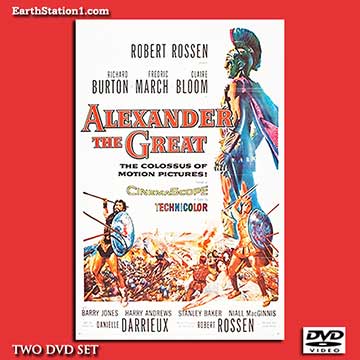
August 31, 1897: #BOTD: #HBD! Fredric
March, American actor regarded as one of Hollywood's most
celebrated stars of the 1930s and 1940s (d. April 14, 1975) is
#born Ernest Frederick McIntyre Bickel in Racine, Wisconsin,
Fredric March won the Academy Award for Best Actor for Dr. Jekyll
and Mr. Hyde (1931) and The Best Years of Our Lives (1946), as
well as the Tony Award for Best Actor in a Play for Years Ago
(1947) and Long Day's Journey into Night (1956). March is the only
actor to have won both the Academy Award and the Tony Award twice.
On June 8, 1949 he was, along with Helen Keller, Dorothy Parker,
Danny Kaye, John Garfield, Paul Muni and Edward G. Robinson, named
in an FBI report as Communist Party members. Such reports helped
to fuel the anticommunist hysteria in the United States during the
late-1940s and 1950s. The FBI report relied largely on accusations
made by "confidential informants," supplemented with
some highly dubious analysis. It began by arguing that the
Communist Party in the United States claimed to have "been
successful in using well-known Hollywood personalities to further
Communist Party aims." The report particularly pointed to the
actions of the Academy Award-winning actor Frederic March.
Suspicions about March were raised by his activities in a group
that was critical of America's growing nuclear arsenal (the group
included other well-known radicals such as Helen Keller and Danny
Kaye). March had also campaigned for efforts to provide relief to
war-devastated Russia. The report went on to name several others
who shared March's political leanings: Edward G. Robinson, the
African American singer; actor and activist Paul Robeson; the
writer Dorothy Parker; and a host of Hollywood actors, writers,
and directors. The FBI report was part of a continuing campaign by
the U.S. government to suggest that Hollywood was rife with
communist activists who were using the medium of motion pictures
to spread the Soviet party line. Congressional investigations into
Hollywood began as early as 1946. In 1947, Congress cited 10
Hollywood writers and directors for contempt because they refused
to divulge their political leanings or name others who might be
communists. The "Hollywood Ten," as they came to be
known, were later convicted and sent to prison for varying terms.
In response to this particular round of allegations from the FBI,
movie tough-guy Edward G. Robinson declared, "These rantings,
ravings, accusations, smearing, and character assassinations can
only emanate from sick, diseased minds of people who rush to the
press with indictments of good American citizens. I have played
many parts in my life, but no part have I played better or been
more proud of than that of being an American citizen.".
Fredric March died of prostate cancer in Los Angeles at the age of
77. He is buried at his estate in New Milford, Connecticut. On
Sale Until Midnight Tonight PT!
https://store.earthstation1.com/alexander-the-great-1956-richard-burton-frederic-march-dvd-mp19564.html
Today's
EarthStation1.com 15% (Or More!) Off Commemorative Memorial Title:
Prelude To War: Events Directly Leading To WWII DVD, MP4, USB
Drive
Today, August 31, 2026
August 31, 1914: #BOTD: #HBD! Richard
Basehart, American TV and film actor, director and voice actor (d.
September 17, 1984) is #born John Richard Basehart in Zanesville,
Ohio. starred as Admiral Harriman Nelson in the television science
fiction-drama Voyage to the Bottom of the Sea (1964-68). He
narrated many television documentaries during the 1960s. He also
prominently portrayed Wilton Knight in the cult series Knight
Rider (1982-86). Basehart was equally active in cinema, receiving
National Board of Review Awards for his performances in Fourteen
Hours (1951) and Moby Dick (1956). He was further nominated for a
BAFTA Award for his role in Time Limit (1957), the directorial
debut of Karl Malden. Richard Basehart died in Los Angeles
following a series of strokes, aged 70. His body was cremated, and
the ashes interred at Westwood Village Memorial Park Cemetery in
Los Angeles. He died eight days before Walter Pidgeon, his film
counterpart in Voyage to the Bottom of the Sea. On Sale Until
Midnight Tonight PT!
https://store.earthstation1.com/prelude-to-war-events-directly-leading-to-wwii-dvd-mp4-us4.html
Today's
EarthStation1.com 15% (Or More!) Off Commemorative Memorial Title:
The Story Of Civilization: Will & Ariel Durant DVD, MP3
Download, USB
Today, August 31, 2026
August 31, AD 12: #BOTD: Caligula,
eccentric and sadistic despot Roman Emperor (d. January 24, 41) is
#born Gaius Julius Caesar in Antium, Italy. Gaius Julius Caesar
Augustus Germanicus, better known by his nickname Caligula (Latin:
Little Boots"), was a member of the house of rulers
conventionally known as the Julio-Claudian dynasty. There are few
surviving sources about the reign of Emperor Caligula, although he
is described as a noble and moderate ruler during the first six
months of his reign. After this, the sources focus upon his
cruelty, sadism, extravagance, and sexual perversity, presenting
him as an insane tyrant. While the reliability of these sources is
questionable, it is known that during his brief reign, Caligula
worked to increase the unconstrained personal power of the
emperor. In early AD 41, Caligula was assassinated as a result of
a conspiracy by officers of the Praetorian Guard, senators, and
courtiers. The conspirators' attempt to use the opportunity to
restore the Roman Republic was thwarted: on the day of the
assassination of Caligula, the Praetorian Guard declared
Caligula's uncle, Claudius, the next Roman emperor. Although born
as Gaius Julius Caesar Augustus Germanicus (31 August AD 12 - 24
January AD 41), Gaius Caesar for short , he acquired the nickname
"Caligula" (meaning "little soldier's boot",
the diminutive form of caliga) from his father's soldiers during
their campaign in Germania. He was Roman emperor from AD 37 to AD
41. The son of Germanicus, a popular Roman general, and Agrippina
the Elder, the granddaughter of Augustus, Caligula was born into
the first ruling family of the Roman Empire, conventionally known
as the Julio-Claudian dynasty. Two years after Caligula's birth,
Germanicus' uncle and adoptive father, Tiberius, succeeded
Augustus as emperor of Rome in AD 14. When his father Germanicus
died at Antioch in AD 19 under suspicious circumstances that,
according to author Robert Graves, implicated Caligula, Agrippina
returned with her six children to Rome, where she became entangled
in a bitter feud with Tiberius. The conflict eventually led to the
destruction of her family, with Caligula as the sole male
survivor. Untouched by the deadly intrigues, Caligula accepted an
invitation in AD 31 to join the emperor on the island of Capri,
where Tiberius had withdrawn five years earlier. Following the
death of Tiberius, Caligula succeeded his adoptive grandfather as
emperor in AD 37. In early AD 41, Caligula was assassinated as a
result of a conspiracy by officers of the Praetorian Guard,
senators, and courtiers. The conspirators' attempt to use the
opportunity to restore the Roman Republic was thwarted, however.
On the day of the assassination of Caligula, the Praetorians
declared Caligula's crippled uncle, Claudius, the next Roman
emperor. Although the Julio-Claudian dynasty continued to rule the
empire until the fall of Nero in AD 68, Caligula's death marked
the official end of the Julii Caesares in the male line. Caligula
died by assassination aged 28 on Palatine Hill, Rome, Italy by
officers within the Praetorian Guard led by Cassius Chaerea. They
accosted Caligula as he addressed an acting troupe of young men
beneath the palace, during a series of games and dramatics being
held for the Divine Augustus. Details recorded on the events vary
somewhat from source to source, but they agree that Chaerea
stabbed Caligula first, followed by a number of conspirators.
Suetonius records that Caligula's death resembled that of Julius
Caesar; he states that both the elder Gaius Julius Caesar (Julius
Caesar) and the younger Gaius Julius Caesar (Caligula) were
stabbed 30 times by conspirators led by a man named Cassius
(Cassius Longinus and Cassius Chaerea respectively). By the time
loyal Germanic guards of Caligula's responded, the Emperor was
already dead; they then killed several assassins and conspirators,
along with some innocent senators and bystanders. These wounded
conspirators were treated by the physician Arcyon. The
cryptoporticus (underground corridor) beneath the imperial palaces
on the Palatine Hill where this event took place was discovered by
archaeologists in 2008. The Senate attempted to use Caligula's
death as an opportunity to restore the Republic. Chaerea tried to
persuade the military to support the Senate, but the military
remained loyal to the idea of imperial monarchy. Uncomfortable
with lingering imperial support, the assassins sought out and
killed Caligula's wife, Caesonia, and killed their young daughter,
Julia Drusilla, by smashing her head against a wall. They were
unable to reach Caligula's uncle, Claudius. After a soldier,
Gratus, found Claudius hiding behind a palace curtain, he was
spirited out of the city by a sympathetic faction of the
Praetorian Guard to their nearby camp. Claudius became emperor
after procuring the support of the Praetorian Guard. Claudius
granted a general amnesty, although he executed a few junior
officers involved in the conspiracy, including Chaerea. According
to Suetonius, Caligula's body was placed under turf until it was
burned and entombed by his sisters. He was buried within the
Mausoleum of Augustus; in 410, during the Sack of Rome, the ashes
in the tomb were scattered. On Sale Until Midnight Tonight PT!
https://store.earthstation1.com/story-of-civilization-will-amp-ariel-durant-mp3-dvd-11-audiobo311.html
Today's
EarthStation1.com 15% (Or More!) Off Commemorative Memorial Title:
The Fall Of The Roman Empire 1964 DVD, Video Download, USB Flash
Drive
Today, August 31, 2026
August 31, 161: #BOTD: Commodus, Roman
emperor with his father Marcus Aurelius from 177 until his
father's death in 180, and solely until 192 (d. December 31, 192)
is #born Lucius Aelius Aurelius Commodus in Lanuvium, near Rome.
His reign is commonly considered to mark the end of the golden
period in the history of the Roman Empire known as the Pax Romana.
He accompanied Marcus his father during the Marcomannic Wars in
172 and on a tour of the Eastern provinces in 176. He was made the
youngest consul in Roman history in 177 and later that year
elevated to co-emperor with his father. During his solo reign, the
Empire enjoyed a period of reduced military conflict compared with
the reign of Marcus Aurelius, but intrigues and conspiracies
abounded, leading Commodus to an increasingly dictatorial style of
leadership that culminated in a god-like personality cult, with
him performing as a gladiator in the Colosseum. Cassius Dio, a
first-hand witness, described him as lustful and cruel, and there
were many attempts on his life. His assassination in 192 marked
the end of the Nerva-Antonine dynasty. He was succeeded by
Pertinax, the first emperor in the tumultuous Year of the Five
Emperors. Commodus was assassinated in a plot led by his favorite
mistress (concubine), the previously steadfastly loyal Marcia,
whom he had planned to execute the following morning along with
fellow plotters Laetus (Quintus Aemilius Laetus), a Praetorian
prefect, and Eclectus, Commodus' chamberlain. In November 192,
Commodus held Plebeian Games, in which he shot hundreds of animals
with arrows and javelins every morning, and fought as a gladiator
every afternoon, winning all the fights. In December, he announced
his intention to inaugurate the 193 as both consul and gladiator.
To celebrate the Roman New Year on January 1, 192 AD, Commodus
decided he wanted to make an appearance before the Roman people
not from the palace in traditional purple robes, but from the
gladiator's barracks, escorted by the rest of the gladiators.
After telling his plan to Marcia on December 31, she begged him
not to behave so carelessly and bring disgrace to the Roman
Empire. Commodus, upset by Marcia's reaction, then told his plan
to Aemilius Laetus, the Praetorian Prefect, and Eclectus, his
servant. After they, too, tried to dissuade him, he became furious
and put their three names on a proscribed list of people to be
executed the next morning, including names of prominent senators.
While Commodus was taking a bath, his favorite servant boy
Philcommodus (whose name is a symbol of Commodus' fondness for the
boy) found the tablet on which the list was written and ran into
Marcia while he was holding the tablet. Marcia took it from him,
thinking she was protecting a document from potentially being
ruined, and in horror saw her name at the top of the list.
According to Herodian, she cried out, "Well done, indeed,
Commodus. This is fine return for the kindness and affection I
have lavished on you and for the drunken insults which I have
endured from you all these years. A fuddled drunkard is not going
to get the better of a sober woman". She then gathered
Praetorian prefect Laetus and Eclectus, Commodus' chamberlain, and
the three of them decided they had to kill Commodus in order to
save their own lives. Usually Marcia would give the emperor his
first drink after his bath so he could have the pleasure of
drinking from his lover's hand. It was easy, then, for her to mix
poison into the wine she gave to Commodus after his bath. After
drinking the wine, he became so ill that his vomiting would not
cease. The three conspirators were afraid he would expel all the
poison, so they ordered Narcissus, his wrestling partner, to
strangle Commodus for a large reward. Upon his death, the Senate
declared him a public enemy (a de facto damnatio memoriae) and
restored the original name of the city of Rome from the name
Commodus had changed it to (Colonia Lucia Annia Commodiana) and
its institutions which he likewise renamed. Statues of Commodus
were demolished, and his name was expunged from official records
(Damnatio Memoriae, "Damnation Of Memory", the exclusion
of a person from official accounts). His body was buried in the
Mausoleum of Hadrian. Marcia and Eclectus were thereafter married.
Commodus' death marked the end of the Nerva-Antonine dynasty.
Commodus was succeeded by Pertinax, whose reign was short-lived;
he would become the first Emperor of the tumultuous Year Of The
Five Emperors, and was usurped by Didius Julianus, the second
Emperor of The Year Of The Five Emperors, who soon had Marcia
killed in 193 AD. In 195, the emperor Septimius Severus, trying to
gain favour with the family of Marcus Aurelius, rehabilitated
Commodus' memory and had the Senate deify him. On Sale Until
Midnight Tonight PT!
https://store.earthstation1.com/the-fall-of-the-roman-empire-1964-dvd-set-aleq-guinness-sophia-l1964.html
Today's
EarthStation1.com 15% (Or More!) Off Commemorative Memorial Title:
The French Revolution Series + Irish Rebellion & You Are There
MP4 DVD
Today, August 31, 2026
August 31, 1798: The Age Of Enlightenment
(The Enlightenment, The Age Of Reason): The Age Of Revolution: The
Atlantic Revolutions: The French Revolution: The French
Revolutionary And Napoleonic Wars (The Great French War) (The
French Revolutionary Wars, The Napoleonic Wars): The Napoleonic
Wars: The Irish Rebellion Of 1798 (Irish: Eiri Amach 1798) (The
United Irishmen Rebellion [Irish: Eiri Amach Na nEireannach
Aontaithe], Ulster-Scots: The Hurries): The Irish Republic Of 1798
(The Republic Of Connacht): -- Irish rebels declare The Irish
Republic Of 1798, more commonly known as the Republic of Connacht,
a puppet state proclaimed as the successor to the Kingdom Of
Ireland with the assistance and support of a force of 1,000 French
soldiers under French General Jean Joseph Amable Humbert who had
landed at Killala in County Mayo on August 22. The Republic
theoretically controlled the whole island of Ireland, but its
actual control was limited to only very small parts of the
country, mainly in the Province of Connacht. The Kingdom Of
Ireland state forces maintained presence across most of the
country including the main towns such as Dublin, Belfast and Cork.
As a puppet state of the French Republic and a rebel republic
sympathetic to their cause, the founding of The Republic Of
Connacht. is considered an important part of the history of the
French Revolution. The Republic Of Connacht lasted from August 31.
1798 till only September 23, 1798, only three weeks after its
proclamation, when the September 8, 1798 defeat of the French at
the Battle of Ballinamuck freed of the English to conduct the
Storming Of Killala defeated the rebel Irish. Thereafter, the
Irish Rebellion Of 1798 was quashed on October 12, 1798. On Sale
Until Midnight Tonight PT!
https://store.earthstation1.com/the-french-revolution-dvd-3-part-tv-documentary-serie3.html
Today's
EarthStation1.com 15% (Or More!) Off Commemorative Memorial Title:
The Battle Of Iwo Jima Documentaries Set DVD, MP4 Download, USB
Drive
Today, August 31, 2026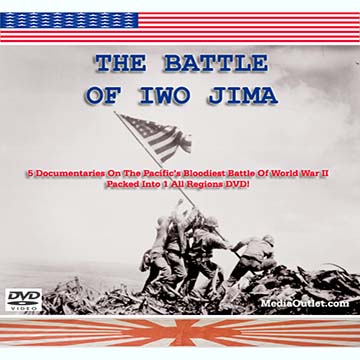
August 31, 1943: Naval History: The
History Of The United States Navy: The New United States Navy (The
New Navy, The United States Navy 1885-Present): Naval Commissions:
The USS Harmon (DE-678): -- USS Harmon, the first U.S. Navy ship
to be named after a black person, Mess Attendant Leonard Roy
Harmon, who was posthumously awarded the Navy Cross for his
actions on the cruiser USS San Francisco during the Battle Of
Guadalcanal, is commissioned, with Lieutenant Commander Kendall E.
Read in command. USS Harmon (DE-678) was a Buckley-class destroyer
escort, a type of ship that served in World War II as convoy
escorts and anti-submarine warfare ships. Harmon was launched July
25, 1943 by Bethlehem Steel Co., Quincy, Massachusetts; sponsored
by Mrs. Nau-nita Harmon Carroll, mother of Mess Attendant Harmon.
After shakedown out of Bermuda, Harmon departed Norfolk on
November 7, 1943, and transited the Panama Canal to take up duty
with the 3rd Fleet, one of the numbered fleets in the United
States Navy responsible for approximately fifty million square
miles of the eastern and northern Pacific Ocean. Arriving Noumea,
New Caledonia on December 25, she remained in that area serving as
escort ship until September 18, 1944, when she proceeded to Pearl
Harbor for overhaul and training. Harmon returned to Manus in
Papua New Guinea on November 24 1944, and joined the 7th Fleet, a
numbered forward-deployed fleet of the United States Navy
responsibile for military operations throughout the Pacific, as a
unit of Admiral R. L. Conolly's Luzon Reinforcement Group. Harmon
sortied from Manus January 2, 1945 with this large convoy and
sailed through dangerous waters, arriving at the transport area on
the eastern side of Lingayen Gulf on January 11. On March 5,
Harmon arrived off Iwo Jima to act as escort and antisubmarine
screen. This duty lasted until March 27, 1945, when she proceeded
to Pearl Harbor and reported to the 1st Fleet for training. She
remained there until August when Harmon was ordered to Mare Island
to increase her firepower by replacing her 3-inch (76 mm) guns
with 5-inch mounts. The war over, Harmon departed San Diego on
January 7, 1946 for the Canal Zone where she conducted training
operations with submarines. Clearing Cristobal March 28, Harmon
arrived in New London April 3, 1946. Here she trained with
submarines until December, then decommissioned at Green Cove
Springs, Florida on March 25, 1947, and joined the Atlantic
Reserve Fleet. Harmon was struck from the Navy List on August 1,
1965, and sold to North American Smelting Co., Wilmington,
Delaware on January 30, 1967 to be scrapped. Harmon received three
battle stars for World War II service. Leonard Roy Harmon (January
21, 1917 - November 13, 1942) was an American sailor who died in
action during World War II and was posthumously awarded the Navy
Cross for his valor. He is the first African American man to have
a US warship named after him. Harmon was born in Cuero, Texas, on
January 21, 1917. He attended the segregated all-black Daule High
School before working in livestock production. During the Great
Depression, he performed various house and grounds chores for the
owner of the historic William Frobese home in Cuero. He was 22
years of age when he enlisted in the United States Navy in June
1939 at a San Antonio recruiting station. He reported for training
in Norfolk, Virginia, before reporting for duty on the cruiser USS
San Francisco on October 28, 1939. He trained as a Mess Attendant,
one of the few jobs available to black men in the navy at that
time. The basic job description consisted of serving food to
officers and crew aboard ship. However, like all members of a
ship's crew they were also trained in damage control and had
stations to report to during general quarters. During his service,
Harmon became a Mess Attendant First Class and was serving aboard
the San Francisco during the Naval Battle Of Guadalcanal. On
November 13, 1942, San Francisco was raked by Japanese gunfire
during the battle, killing nearly every officer on the bridge.
Harmon rushed in to evacuate the wounded. He was then assigned to
assist Pharmacist's Mate Lyndford Bondsteel in evacuating and
caring for the wounded. While the ship was being raked by enemy
gunfire, Harmon helped evacuate the wounded to a dressing station.
While doing so he deliberately stood between Bondsteel and enemy
gunfire in order to protect his wounded shipmate. This action
resulted in his death. Harmon was awarded the Navy Cross
posthumously on March 1943. Additionally, two ships were named in
his honor. HMS Aylmer (K463) had been provisionally named USS
Harmon (DE-72) but was transferred to the Royal Navy prior to
completion. The USS Harmon (DE-678) served from 1943 to 1947 and
remained in the Reserve Fleet until 1967. Harmon's heroism was
also commemorated by the naming and dedication of Harmon Hall,
bachelor enlisted quarters at Naval Air Station North Island at
the north end of the Coronado peninsula on San Diego Bay and is
the home port of several aircraft carriers of the United States
Navy, on July 29, 1975. A state historical marker placed at the
Cuero Municipal Park in Cuero, Texas in 1977. A poster of him
hangs in the National Portrait Gallery in Washington, DC. On Sale
Until Midnight Tonight PT!
https://store.earthstation1.com/the-battle-of-iwo-jima-documentary-films-dvd.html
Today's
EarthStation1.com 15% (Or More!) Off Commemorative Memorial Title:
The Struggles For Poland TV Series + Bonus MP4 Video Download DVD
Set
Today, August 31, 2026
August 31, 1980: Eastern Block
Non-Violent Revolutions: The Labor Union Movement In Poland:
Solidarity (Polish Trade Union) (Independent Self-Governing Trade
Union Solidarity, Solidarnosc): The Polish Crisis Of 1980-1981:
The Gdansk Agreement (Polish: Porozumienia Sierpniowe, "August
Agreements") -- The Gdansk Agreement, a set of four accords
reached between the government of the Polish People's Republic and
the striking shipyard workers in Poland, is signed by government
representative Mieczyslaw Jagielski and strike leader Lech Walesa,
leading to the creation of the trade union Solidarity with Walesa
as its head and becoming an important milestone towards the
eventual end of Communist rule in Poland. In summer 1980, faced
with a major economic crisis, the Polish government authorized a
rise in food prices, which immediately led to a wave of strikes
and factory occupations across the country. On August 14, workers
at the Lenin Shipyard in Gdansk went on strike after the sacking
of Polish trade unionist and future co-founder of Solidarity Anna
Walentynowicz, five months before she was set to retire. The
Inter-Enterprise Strike Committee, headed by Walesa, issued a list
of 21 demands to the government. Thanks to popular support within
the country, the workers held out until the government gave in to
their demands, and an agreement was formalized on August 31. In
the aftermath of the strike, Solidarity emerged as an independent
trade union and rapidly grew, ultimately claiming over 10 million
members nationwide and establishing itself as a major force in
Polish politics. First Secretary of the ruling Polish United
Workers' Party (PZPR) Edward Gierek, who served as the de facto
leader of the Polish People's Republic between 1970 and 1980, was
removed from power and replaced by Stanislaw Kania, a communist
politician who served as the de facto leader of the Polish
People's Republic as First Secretary, who served in that position
until October 1981. On Sale Until Midnight Tonight PT!
https://store.earthstation1.com/the-struggles-for-poland-dvd-set-all-9-shows-5-dis95.html
Today's
EarthStation1.com 15% (Or More!) Off Commemorative Memorial Title:
The Struggles For Poland TV Series + Bonus MP4 Video Download DVD
Set
Today, August 31, 2026
August 31, 1982: Eastern Block
Non-Violent Revolutions: The Labor Union Movement In Poland:
Solidarity (Polish Trade Union) (Independent Self-Governing Trade
Union Solidarity, Solidarnosc): The 1982 Demonstrations In Poland:
The Lubin Events: -- Anti-government street demonstrations
organized by underground Solidarity to commemorate the second
anniversary of the Gdansk Agreement break out in 66 cities across
Poland; the bloodiest protest occurs in Lubin in southwestern
Poland, resulting in three protesters killed by Communist
services, and an unknown number of wounded. According to
Solidarity sources, there were four more victims -- in Wroclaw,
Gdansk, Nowa Huta, and Torun. On December 13, 1981 the Communist
government of Poland under general Wojciech Jaruzelski had crushed
the opposition and introduced martial law. The main oppositional
movement, Solidarity, was delegalized, and its key members were
interned. However, by April 1982, Solidarity re-emerged, creating
its underground body, the Temporary Coordinating Committee (known
as TKK from the Polish name Tymczasowa Komisja Koordynacyjna),
with delegates who had eluded arrests - Zbigniew Bujak from
Warsaw, Bogdan Lis from Gdansk, Wladyslaw Frasyniuk from Wroclaw,
and Wladyslaw Hardek from Krakow. At the beginning, the Committee
opposed street demonstrations, drawing the so-called "Five
Times Yes" appeal, which stipulated negotiations with the
government and release of all political prisoners. However, when
the program was rejected, the Committee changed its stance,
announcing the "Five Times Mo" appeal, and urging the
nation to participate in demonstrations beginning on August 31,
1982, the second anniversary of the Gdansk Agreement. The protests
were organized by all regional underground structures of
Solidarity. In Lower Silesia, the main oppositional bodies were
Regional Strike Committee, and Fighting Solidarity. In Legnica
Voivodeship, there also were such organizations, such as The
Interfactory Strike Committee and The Interfactory Coordinating
Committee. The demonstrations were regarded as very important for
the future of the opposition movements, as activists hoped that
they would become a turning point, forcing the government to
change its policy. The government was aware of these plans, and
initiated a massive propaganda campaign, aimed at reducing the
number of demonstrators. Special posters were printed and
distributed, and on August 25, the Polish Interior Minister (and
the future and last Communist Prime Minister who presided over the
country's transition to democracy in 1989) General Czeslaw
Kiszczak spoke on TV, warning against "possible tragic
consequences". His threats were barely concealed: "If
the provocateurs have not had enough of their lessons, we will
provide them with some more". In factories across the nation,
party activists warned the workers, telling them not to
demonstrate. However, the most important part of the action was
carried out by the Polish security services. In the last days of
August, its agents detained hundreds of people, and confiscated
several underground printing shops. On August 28, during a
teleconference, General Kiszczak told police commanders of the
voivodeships: "The victory must be ours. We have to use a
tough rule of action: be quick and determined". Members of
The Politburo Of The Polish United Workers' Party (the official
Polish Communist Party) resorted to an overblown and exaggerated
tone while describing the plans of Solidarity; on August 26,
during a meeting with their party activists in Szczecin, they
proclaimed "The plans of the extremists are the following:
public gatherings, a general strike, and, if necessary, an
uprising aimed at overthrowing the social system. I accuse
Solidarity leaders of political stupidity, leading to crimes
against the state and the nation". On August 27, Zbigniew
Bujak, one of the Solidarity leaders who had eluded arrest,
published a statement, in which he urged the nation to participate
in rallies and demonstrations on the second anniversary of the
Gdansk Agreement. Two days later, General Jaruzelski warned people
to keep away from protests. On the next day, units of riot police
armed with water cannons were deployed on the streets of Warsaw
and other main cities of the country. Citizens were warned that
the government would not hesitate to use force. The Polish Press
Agency (PAP) issued a statement, which said: "The martial law
decree makes the forces of law and order absolutely responsible
for ensuring public order. In order to fulfill this duty, the
agencies of law and order may use means of direct compulsion and
in special cases they can be aided by units of the armed forces".
In Wroclaw, which was one of main centers of underground
Solidarity, several thousand people for many hours fought riot
police and soldiers. One demonstrator, 27-year-old Kazimierz
Michalczyk, was killed by a bullet. Street fights were a common
sight not only in major urban centers, such as Warsaw, Krakow,
Szczecin, Wroclaw, Lodz, and Gdansk, but also in provincial cities
(Rzeszow, Koszalin, Kielce, Przemysl, Czestochowa, Bielsko-Biala,
Gorzow Wielkopolski), and towns (Starachowice, Lubin, Konin). The
magnitude of the demonstrations was confirmed by official sources,
as on September 1 PAP reported that a day before, the police
detained 4,050 people nationwide (589 in Warsaw, 645 in Wroclaw,
201 in Szczecin, and 120 in Gorzow Wielkopolski). Among those
arrested was Zbigniew Romaszewski, a Solidarity activist and
physicist of the Polish Academy of Sciences. Besides Michalczyk,
who was killed in Wroclaw, other victims of police brutality were
32-year-old Piotr Sadowski from Gdansk, Mieczyslaw Joniec from
Nowa Huta, and Jacek Osmanski from Torun. Another victim was
35-year-old Stanislaw Raczek, who was severely beaten during a
protest in Kielce, and died on September 7. In Kielce, where about
4,000 people demonstrated in front of the Kielce Cathedral, riot
police used tear gas and truncheons. In Koszalin, at the main
market square, some 3,000 people showed up, who were dispersed by
the police. In northwestern city of Gorzow Wielkopolski, some
5,000 people appeared in front of St. Mary's Cathedral. The
demonstration turned into a riot, which lasted several hours, and
in which 14 police vehicles were destroyed, 24 officers and 5
demonstrators were wounded, and 200 people detained. Among towns
and cities whose citizens joined the demonstrations was the
southwestern copper-mining town of Lubin in Lower Silesian
Voivodeship. The rally in the local Freedom Square began on Augus
31t; at 3 pm a cross made of flowers was laid and a small banner
was raised. People sang the Polish national anthem, and then
chanted "down with the junta", "release those
interned", "Jaruzelski is a traitor and murderer of the
nation", "down with communism", "free Lech
Walesa", etc. About 30 minutes later, the crowd of 2,000 was
surrounded by 80-member unit of the riot police. In response,
agitated protesters shouted: "pigs", "bandits",
"Gestapo", "servants of Brezhnev". People
unsuccessfully tried to erect a barricade. They were attacked and
dispersed with tear gas. At 4 pm, a platoon of riot police (ZOMO)
from Legnica appeared on Lubin streets and immediately attacked
the protesters. The officers were armed with AK-47 assault rifles,
which they pointed towards the demonstrators. When the line of
policemen reached the intersection of Kopernika and Odrodzenia
streets, some of them opened fire. A few minutes later, two men,
26-year-old Mieczyslaw Pozniak and 32-year-old Andrzej Trajkowski,
were mortally wounded. The events of the late afternoon and
evening hours are difficult to recount. It has been established
that the police opened fire several times more, thus hitting
28-year-old Michal Adamowicz in the back of his head; he died on
September 5. Before 5 pm, another ZOMO platoon came to Lubin (its
members were armed with semi-automatic pistols P-83 Wanads), and
local police commandant asked offices in Leszno and Zielona Gora
to send more reinforcements. At about 5:30, the police changed
their tactics. Instead of attacking large groups of demonstrators,
the officers created the so-called raid groups, consisting of 6-7
officers, riding in Nysa vans. They roamed the town, brutally
attacking even single persons. Meanwhile, the demonstrators, upon
finding out about deaths of their two colleagues, became more
determined. More people joined the fighting, and riots lasted
until 10:30 pm, when another ZOMO company from Zielona Gora, a
platoon of soldiers from Krosno Odrzanskie, and three water
cannons were brought to Lubin. Altogether, 1,323 officers pacified
the demonstration, and new street fights erupted in the town on
September 2 and September 3. Altogether, on August 31 in Lubin,
three demonstrators were killed, unknown number wounded (six of
them were hit by bullets), and about 300 people were arrested.
Immediately after pacification of the town, security forces began
destruction of evidence. On the night of August 31 - September 1
the streets were carefully cleaned, with all shells and bullets
taken for analysis. On September 2 police authorities ordered
repairs of damaged buildings - broken windows were replaced, and
traces of bullets on the walls were covered with plaster. The
investigation, despite consistent statements by witnesses
attesting to the massacre there, was closed. On Sale Until
Midnight Tonight PT!
https://store.earthstation1.com/the-struggles-for-poland-dvd-set-all-9-shows-5-dis95.html
Today's
EarthStation1.com 15% (Or More!) Off Commemorative Memorial Title:
The Marble Hunter: Charles Fellows In Turkey MP4 Video Download
DVD
Today, August 31, 2026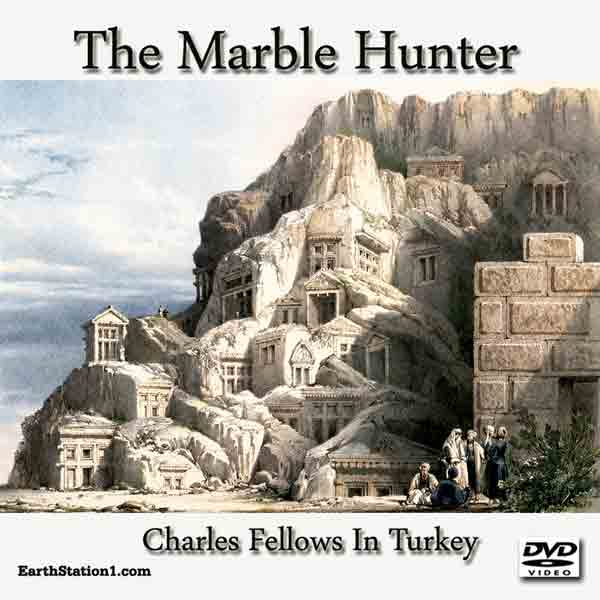
August 31, 1799: #BOTD: Charles Fellows,
British archaeologist and explorer, known for his numerous
expeditions in what is present-day Turkey (d. November 8, 1860) is
#born at High Pavement, Nottingham, the fifth son of John Fellows,
a wealthy silk merchant and banker, and his wife Sarah. Sir
Charles Fellows drew sketches to illustrate a trip to the ruins of
Newstead Abbey when fourteen years old, which afterwards appeared
on the title-page of Moore's Life Of Lord Byron. In 1820 he
settled in London, where he became an active member of the British
Association. In 1827 he discovered the modern ascent of Mont
Blanc. After the death of his mother in 1832 he passed the greater
portion of his time in Italy, Greece and the Levant. The numerous
sketches he executed were largely used in illustrating Childe
Harold. In 1838 he went to Asia Minor, making Smyrna his
headquarters. His explorations in the interior and the south led
him to districts practically unknown to Europeans, and he thus
discovered ruins of a number of ancient cities. He entered Lycia
and explored the Xanthus from the mouth at Patara upwards. Nine
miles from Patara he discovered the ruins of Xanthus, the ancient
capital of Lycia, finely situated on hills, and abounding in
magnificent remains. About 15 miles farther up he came upon the
ruins of Tlos. After taking sketches of the most interesting
objects and copying a number of inscriptions, he returned to
Smyrna through Caria and Lydia. The publication in 1839 of A
Journal written during an Excursion in Asia Minor roused such
interest that Lord Palmerston, at the request of the British
Museum authorities, asked the British consul at Constantinople to
obtain a firman from the sultan to export a number of the Lycian
works of art to England. Having obtained the firman, Fellows,
under the auspices of the British Museum, again set out for Lycia
in late 1839. He was accompanied by the painter George Scharf, who
assisted him by sketching the expedition. This second visit
resulted in the discovery of thirteen ancient cities, chief among
them Xanthos. He made a further trip in 1841. Fellows led the
archaeological excavation of Xanthos and other Lycian cities in
Asia Minor and shipped an enormous amount of antique monuments to
England, where they may be seen today in the British Museum. They
include reliefs from the Harpy Tomb and the Nereid Monument,
amongst many others. In 1841, he published An Account of
Discoveries in Lycia, being a Journal kept during a Second
Excursion in Asia Minor. Three years later he presented to the
British Museum his portfolios, accounts of his expeditions, and
specimens of natural history illustrative of Lycia. In 1845, he
was knighted as an acknowledgment of his services in the removal
of the Xanthian antiquities to Britain. Fellows paid his own
expenses in all his journeys and received no financial reward for
his endeavors. Fellows was married twice, died in London in 1860
and was buried on the western side of Highgate Cemetery. On Sale
Until Midnight Tonight PT!
https://store.earthstation1.com/the-marble-hunter-charles-fellows-in-turkey-mp4-video-download-dv4.html
Today's
EarthStation1.com 15% (Or More!) Off Commemorative Memorial Title:
My Name Is Bertolt Brecht: Exile Years In The USA DVD, Download,
USB
Today, August 31, 2026
August 31, 1928: Aesthetics: Performing
Arts: Premieres: Theatre Premieres: Musical Premieres: Opera
Premieres: -- The Threepenny Opera (Die Dreigroschenoper) opens at
the Theater Am Schiffbauerdamm in Berlin. The Threepenny Opera is
a "play with music" by Bertolt Brecht, adapted from a
translation by Elisabeth Hauptmann of John Gay's 18th-century
English ballad opera, The Beggar's Opera, and four ballads by
Francois Villon, with music by Kurt Weill. Although there is
debate as to how much, if any, Hauptmann might have contributed to
the text, Brecht is usually listed as sole author. The work offers
a socialist critique of the capitalist world. Songs from The
Threepenny Opera have been widely covered and become standards,
most notably "Die Moritat von Mackie Messer" ("The
Ballad of Mack the Knife") and "Seerauberjenny"
("Pirate Jenny"). On Sale Until Midnight Tonight PT!
https://store.earthstation1.com/my-name-is-bertolt-brecht-the-exile-years-in-the-usa-dvd.html
Today's
EarthStation1.com 15% (Or More!) Off Commemorative Memorial Title:
Arthur Godfrey TV Shows Collection DVD, MP4 Download, USB Flash
Drive
Today, August 31, 2026
August 31, 1903: #BOTD: #HBD! Arthur
Godfrey, nicknamed The Old Redhead, American radio and television
broadcaster and entertainer (d. March 16, 1983) is #born Arthur
Morton Godfrey in Manhattan, New York City. At the peak of his
success in the mid-1950s, Godfrey helmed two CBS-TV weekly series
and a daily 90-minute television mid-morning show, but, by the
early 1960s, his presence had been reduced to hosting the
occasional TV special and his daily network radio show, which
ended in 1972. One of the medium's early master commercial
pitchmen, he was strongly identified with many of his sponsors,
especially Chesterfield cigarettes and Lipton Tea. Having
advertised Chesterfield for many years, during which time he
devised the slogan "Buy 'em by the carton", Godfrey
terminated his relationship with the company after he quit
smoking, five years before he was diagnosed with lung cancer in
1959. Subsequently, he became a prominent spokesman for
anti-smoking education. An on-air incident involving the firing of
one of his regularly featured singers Julius LaRosa undermined his
folksy image and resulted in a gradual decline. Arthur Godfrey
died at Mount Sinai Hospital in Manhattan at the age of 79 of
emphysema caused by decades of smoking and the radiation
treatments for Godfrey's lung cancer. Godfrey is buried at Union
Cemetery in Leesburg, Virginia, not far from his farm. On Sale
Until Midnight Tonight PT!
https://store.earthstation1.com/arthur-godfrey-dvd-set-2-discs-old-time-t2.html
Today's
EarthStation1.com 15% (Or More!) Off Commemorative Memorial Title:
Inside The KGB Cold War Espionage Documentary James Coburn MP4 Or
DVD
Today, August 31, 2026
August 31, 1928: #BOTD: #HBD! James
Coburn, American actor who was featured in more than 70 films,
largely action roles, and made 100 television appearances during a
45-year career (d. November 18, 2002) is #born James Harrison
Coburn III in Laurel, Nebraska, the son of James Harrison Coburn
II, of Scots-Irish ancestry, and Mylet S. Coburn (nee Johnson), an
immigrant from Sweden. Coburn was in numerous leading roles in
Westerns and action films. He played supporting roles in The
Magnificent Seven, Hell Is for Heroes, The Great Escape, Charade
and Hard Times as well as the lead role in Our Man Flint and its
sequel In Like Flint, The President's Analyst, Duck, You Sucker!,
Pat Garrett and Billy the Kid, and Cross of Iron. In 1998, Coburn
won an Academy Award for his supporting role as Glen Whitehouse in
Affliction. In 2002, he received a Primetime Emmy Award for
Outstanding Miniseries nomination for producing The Mists of
Avalon. During the era of New Hollywood (The Hollywood
Renaissance, or American New Wave, a movement in American film
history from the 1960s to the 1980s), he cultivated an image
synonymous with "cool". James Coburn died of a heart
attack at his home in Beverly Hills, California at the age of 74.
His wife, Paula, said that he died in her arms when they were
listening to music together. He was rushed to Cedars-Sinai Medical
Center where he was pronounced dead. He is buried in The Garden Of
Serenity Columbarium in Westwood Memorial Park, Westwood, Los
Angeles County, California. Paula Coburn died from cancer less
than two years later on July 30, 2004, at the age of 48, and is
interred beside him. On Sale Until Midnight Tonight PT!
https://store.earthstation1.com/inside-the-kgb-cold-war-espionage-documentary-james-coburn-mp4-or-dvd.html
Today's
EarthStation1.com 15% (Or More!) Off Commemorative Memorial Title:
Rock & Roll An Unruly History 10 Part TV Series MP4 Video
Download DVD
Today, August 31, 2026
August 31, 1945: #BOTD: #HBD! Van
Morrison, Northern Irish singer-songwriter, guitarist, harmonica
player, saxophonist, keyboardist, drummer, tambourine player,
ukulele player and record producer, is #born George Ivan Morrison
at 125 Hyndford Street, Bloomfield, Belfast, Northern Ireland, as
the only child of George Morrison, a shipyard electrician, and
Violet Stitt Morrison, who had been a singer and tap dancer in her
youth. Sir George Ivan Morrison OBE (Officer Of The Most Excellent
Order Of The British Empire) began his professional career as a
teenager in the late 1950s, playing a variety of instruments
including guitar, harmonica, keyboards and saxophone for various
Irish showbands, covering the popular hits of that time. Van
Morrison rose to prominence in the mid-1960s as the lead singer of
the Northern Irish R & B and rock band, Them, with whom he
recorded the garage band classic "Gloria". His solo
career began in 1967, under the pop-hit orientated guidance of
Bert Berns with the release of the hit single "Brown Eyed
Girl". After Berns's death, Warner Bros. Records bought out
his contract and allowed him three sessions to record Astral Weeks
(1968). Though this album gradually garnered high praise, it was
initially a poor seller. Morrison has a reputation for being at
once stubborn, idiosyncratic, and sublime. His live performances
at their best are seen as transcendental and inspired, while some
of his recordings, such as the studio albums Astral Weeks and
Moondance, and the live album It's Too Late to Stop Now, are
highly acclaimed. Moondance (1970) established Morrison as a major
artist, and he built on his reputation throughout the 1970s with a
series of acclaimed albums and live performances. He continues to
record and tour, producing albums and live performances that sell
well and are generally warmly received, sometimes collaborating
with other artists, such as Georgie Fame and The Chieftains. Much
of Morrison's music is structured around the conventions of soul
music and R & B, such as the popular singles "Brown Eyed
Girl", "Jackie Wilson Said (I'm in Heaven When You
Smile)", "Domino" and "Wild Night". An
equal part of his catalogue consists of lengthy, loosely
connected, spiritually inspired musical journeys that show the
influence of Celtic tradition, jazz and stream-of-consciousness
narrative, such as the album Astral Weeks and the lesser known
Veedon Fleece and Common One. The two strains together are
sometimes referred to as "Celtic soul". He has received
two Grammy Awards, the 1994 Brit Award for Outstanding
Contribution to Music, the 2017 Americana Music Lifetime
Achievement Award for Songwriting and has been inducted into both
the Rock and Roll Hall of Fame and the Songwriters Hall of Fame.
In 2016, he was knighted for services to the music industry and to
tourism in Northern Ireland. He is known by the nickname Van the
Man to his fans. On Sale Until Midnight Tonight PT!
https://store.earthstation1.com/rock-amp-roll-an-unruly-history-10-part-tv-series-mp4-video-download-104.html
Today's
EarthStation1.com 15% (Or More!) Off Commemorative Memorial Title:
Washington, D.C. History Video Set DVD, MP4 Download, USB Flash
Drive
Today, August 31, 2026
August 31, 1916: #BOTD: #HBD! Daniel
Schorr, American journalist and author, considered one of
America's greatest broadcast newsmen, who covered international
news for more than 60 years, most notably with CBS News, one of
"Murrow's Boys", listed on Richard Nixon's enemies list
(d. July 23, 2010) is #born Daniel Louis Schorr in the Bronx, New
York, the son of Jewish Russian immigrants Tillie Godiner and
Gedaliah Tchornemoretz. Schorr won three Emmy Awards for his
television journalism, and he was most recently a Senior News
Analyst for National Public Radio (NPR). Following several years
as a stringer, in 1953 he joined CBS News as one of the recruits
of Edward R. Murrow (becoming part of the later generation of
Murrow's Boys). In 1955, with the post-Stalin thaw in the Soviet
Union, he received accreditation to open a CBS bureau in Moscow.
In June 1957, he obtained an exclusive interview with Nikita
Khrushchev, the Soviet Communist Party chief. It aired on CBS's
Face the Nation, Schorr's first television interview. Schorr left
the Soviet Union later that year, because of Soviet censorship
laws. When he applied for a new visa, it was denied by the
Soviets. Schorr once quipped that while he was covering Moscow, he
asked Khrushchev about when the Soviet Central Committe would next
meet, concerned that Schorr might not be present to report on it;
Khrushchev replied that he should not worry about it, but that if
it a meeting was absolutely neccessary, the Central Committee,
would meeting would have to go on without him. In January 1962, he
aired the first examination of everyday life under communism in
East Germany, The Land Beyond the Wall: Three Weeks in a German
City, which The New York Times called a "journalistic coup".
After agreeing not to foster "propaganda" for the United
States, Schorr was granted the rights to conduct the interviews in
Rostock. By airing everyday life, Schorr painted a picture of the
necessity for a Communist state to seal itself off from the West
in order to survive. President John F. Kennedy's Secretary of
State Dean Rusk criticized Schorr's actions in an August 10, 1962
diplomatic cable for a checkbook journalism story (the
controversial practice of news reporters paying sources for their
information) in which, "Schorr involved himself in a matter
which was far beyond his private or journalistic responsibilities
and proceeded amateurishly in a matter filled with greatest danger
for all concerned. As we anticipated, [the] other side turned out
to be fully aware of the matter and laid a trap which could have
resulted in [a] massacre [of] those involved." A meeting with
the State Department over the matter recorded in a cable stated,
"Schorr appeared chastened by [the] fact that a plan which
was to be his greatest achievement had failed. He did not give
slightest appearance of being contrite." CBS executives were
not amused when Schorr reported, incorrectly, that Barry Goldwater
was said to "travel to Germany to join-up with the right-wing
there", and visit "Hitler's one-time stomping ground"
in Berchtesgaden, immediately after he became the Republican
nominee for president. For obvious reasons, this did not fare well
with Goldwater, who demanded an apology for the "CBS
conspiracy" against his campaign for president. Schorr took a
close journalistic interest in the career of Vice President of the
United States Hubert Humphrey. Schorr attracted the anger of
Richard Nixon's White House. In 1971, after a dispute with White
House aides, Schorr's friends, neighbors, and co-workers were
questioned by the Federal Bureau of Investigation (FBI) about his
habits. They were told that Schorr was under consideration for a
high-level position in the environmental area. Schorr knew nothing
about it. Later, during the Watergate hearings, it was revealed
that Nixon aides had drawn up what became known as Nixon's Enemies
List, and Daniel Schorr was on that list as "a real media
enemy". Famously, Schorr read the list aloud on live TV,
surprised to be reading his own name in that context. Schorr won
Emmys for news reporting during the Watergate Scandal years of
1972, 1973, and 1974. Schorr provoked intense controversy in 1976
when he received and made public the contents of the secret Pike
Committee report on illegal Central Intelligence Agency (CIA) and
FBI activities. Called to testify before Congress, he refused to
identify his source on First Amendment grounds, risking
imprisonment. This did not mollify CBS executives, and Schorr
ultimately resigned from his position at CBS in September 1976.
Although scolded at first for his television report by former CIA
director Richard Helms, Schorr was vindicated by the text of the
report, which he had obtained from an undisclosed source and sent
to The Village Voice. Schorr "remained silent in the face of
false suspicions that another CBS correspondent, Lesley Stahl, had
given the (Pike) report to The Voice". Roger Mudd stated in
his autobiography that Schorr personally spread rumors that Stahl
had leaked the paper, while Stahl in her autobiography stated that
she was "flabbergasted" at the accusation from Schorr
and the resulting furor within CBS as the executives were
"deciding what to do" with her over the serious
journalistic breach she was accused of, while Nora Ephron reports
that Stahl considered a slander suit against Schorr. Schorr later
donated his profits from the sale of the Pike papers to the
Reporters' Committee For Freedom of the Press. In 1977, Schorr was
hired by Reese Schonfeld as a White House correspondent for ITNA
(Independent Television News Association), a news agency serving
independent television news stations in the U.S. In 1979,
Schonfeld and Ted Turner brought Schorr to Cable News Network
(CNN), where he was the first on-camera employee hired; CNN
founder Ted Turner promised Schorr a satellite receiver dish if he
accepted, a gift which at that time was very expensive and unique,
so much so that Schorr's radio dish became something of a
landmark. Schorr accordingly reported news and delivered
commentary and news analysis on the fledgling CNN, but his
contract was not renewed in 1985, one of the two times he stated
he was "fired". He then took the position as Senior News
Analyst at NPR, a position he held for decades up to the time of
his death. In that position, he regularly commented on current
events for programs including All Things Considered and Weekend
Edition. On May 14, 2006, Schorr mentioned on Weekend Edition a
meeting at the White House that took place with colleague A. M.
Rosenthal and president Gerald Ford, stating that the Rockefeller
Commission had access to various CIA documents, including those
referring to political assassinations. Schorr also wrote a column
for The Christian Science Monitor for several decades. Schorr was
called "reliably liberal", and was "widely regarded
as a liberal" according to another source, though he regarded
the label as inaccurate. In 1994, Schorr narrated the TV
miniseries, Watergate. In the late 1990s, he appeared briefly as a
newscaster in three Hollywood movies: The Net (1995), The Game
(1997), and The Siege (1998). In The Game, Schorr appeared as
himself as an agent of an organization that interferes with the
main character's life. He also appeared as himself in the
docufiction film World War Three that presented an alternative
ending to the USA/USSR Cold War. Schorr was elected to the
American Academy of Arts and Sciences in 2002. Though not a fan of
rock music, Schorr became friends with composer Frank Zappa after
the latter contacted him, asking for help with a voter
registration drive. Schorr made an appearance with Zappa on
February 10, 1988, where he sang "It Ain't Necessarily So"
and "Summertime". Schorr delivered the eulogy on NPR
after Zappa's death on December 4, 1993; he professed not to
understand Zappa's lengthy discourses on music theory, but he
found a kindred spirit-a serious man with a commitment to free
speech. About 20 years after Nixon's resignation, Schorr attended
a dinner where Nixon spoke about the Soviet Union. After the
dinner ended, Schorr walked up to Nixon and said, "Mr. Nixon,
I'm not sure you'll remember me." Nixon replied, "Dan
Schorr, damn near hired you once." Schorr died from an
apparent "short illness" on July 23, 2010, at a
Washington, D.C. hospital, at the age of 93. Schorr's last
broadcast commentary for NPR aired on Saturday, July 10, 2010 (on
Weekend Edition). His remains are buried at Parklawn Memorial Park
in Rockville, Maryland. On Sale Until Midnight Tonight PT!
https://store.earthstation1.com/washington-dc-history-videos-dvd-mp4-download-usb-driv4.html
Today's
EarthStation1.com 15% (Or More!) Off Commemorative Memorial Title:
The World At War 1942 How WWII Started Documentary DVD, Download,
USB
Today, August 31, 2026
August 31, 1880: #BOTD: #HBD! Wilhelmina
Of The Netherlands, Queen Of The Netherlands from 1890 until her
abdication in 1948 (d. November 28, 1962) is #born Wilhelmina
Helena Pauline Maria in Noordeinde Palace, The Hague, Netherlands.
She was the only child of King William III and Emma of Waldeck and
Pyrmont. Wilhelmina reigned for nearly 58 years, longer than any
other Dutch monarch. Her reign saw both World War I and World War
II, as well as the Dutch economic crisis of 1933. Wilhelmina
ascended to the throne at the age of 10 after her father's death
in 1890, under her mother's regency. After taking charge of
government, Wilhelmina became generally popular for maintaining
Dutch neutrality during the First World War and solving many of
her country's industrial problems. By that time, her business
ventures had made her the world's first female billionaire in
dollars. She went on to ensure that her family was one of seven
European royal houses remaining in existence. Following the German
invasion of the Netherlands in 1940, Wilhelmina fled to Britain
and took charge of the Dutch government-in-exile. She frequently
spoke to the nation over radio and came to be regarded as a symbol
of the resistance although she was criticised for failing to
acknowledge some of the atrocities such as the Bombing of
Nijmegen. By 1948, she had returned to the liberated Netherlands
and was the only survivor of the 16 monarchs who were sitting on
their thrones at the time of her coronation. Increasingly beset by
poor health, Wilhelmina abdicated in favour of her daughter
Juliana in September 1948 and retired to Het Loo Palace, where she
died of cardiac arrest in Het Loo Palace, Apeldoorn, Netherlands
at the age of 82. She was buried in the Dutch royal family crypt
in the Nieuwe Kerk in Delft, on December 8. At her request and
contrary to protocol, the funeral was completely in white to give
expression to her belief that earthly death was the beginning of
eternal life. According to German Salic law, the House of
Orange-Nassau-Dietz became extinct upon her death, but this rule
is not recognised by royal Dutch succession laws. She remains
generally popular in the Netherlands, even among the Dutch
Republican movement. This is due to her being seen as a symbol of
Dutch Resistance during World War II. On Sale Until Midnight
Tonight PT!
https://store.earthstation1.com/the-world-at-war-dvd-1942-motion-pic1942.html
Today's
EarthStation1.com #OnThisDay Commemorative Memorial Title: The
Historical View A Legacy In Pictures JPG Image Set CD Download USB
Today, August 31, 2026 August 31: Chronology: Calendars: The
Months Of The Year: -- August ends, eighth month of the year in
the Julian and Gregorian calendars, the latter being the most
widely used calendar in the world. The month was originally named
Sextilis in Latin because it was the 6th month in the original
ten-month Roman calendar under Romulus in 753 BC, with March being
the first month of the year. About 700 BC, it became the eighth
month when January and February were added to the year before
March by King Numa Pompilius, who also gave it 29 days. Julius
Caesar added two days when he created the Julian calendar in 46
BC, giving it its modern length of 31 days. In 8 BC, the month was
renamed in honor of Emperor Augustus. According to a Senatus
consultum quoted by Macrobius, he chose this month because it was
the time of several of his great triumphs, including the conquest
of Egypt. August succeeds July and precedes September. In the
Northern Hemisphere, August falls in midsummer. In the Southern
Hemisphere, the month falls during midwinter. In many European
countries, August is the holiday month for most workers. Numerous
religious holidays occurred during August in ancient Rome. A
number of meteor showers take place in August: The Kappa Cygnids,
with yearly dates varying; The Alpha Capricornids meteor shower
occurs as early as July 10 and ends around August 10; The Southern
Delta Aquariids occur from mid-July to mid-August, with the peak
usually around July 28-29; and The Perseids, a major meteor
shower, typically takes place between July 17 and August 24, with
the peak days varying yearly. The star cluster of Messier 30 is
best observed around August. August's birthstones are the peridot,
sardonyx, and spinel. Its birth flower is the gladiolus or poppy,
meaning beauty, strength of character, love, marriage and family.
The Western zodiac signs are Leo (until August 22) and Virgo (from
August 23 onward).
https://store.earthstation1.com/the-historical-view-a-legacy-in-pictures-jpg-photo-cd.html
August 31: Chronology: Calendars: The
Months Of The Year: -- August ends, eighth month of the year in
the Julian and Gregorian calendars, the latter being the most
widely used calendar in the world. The month was originally named
Sextilis in Latin because it was the 6th month in the original
ten-month Roman calendar under Romulus in 753 BC, with March being
the first month of the year. About 700 BC, it became the eighth
month when January and February were added to the year before
March by King Numa Pompilius, who also gave it 29 days. Julius
Caesar added two days when he created the Julian calendar in 46
BC, giving it its modern length of 31 days. In 8 BC, the month was
renamed in honor of Emperor Augustus. According to a Senatus
consultum quoted by Macrobius, he chose this month because it was
the time of several of his great triumphs, including the conquest
of Egypt. August succeeds July and precedes September. In the
Northern Hemisphere, August falls in midsummer. In the Southern
Hemisphere, the month falls during midwinter. In many European
countries, August is the holiday month for most workers. Numerous
religious holidays occurred during August in ancient Rome. A
number of meteor showers take place in August: The Kappa Cygnids,
with yearly dates varying; The Alpha Capricornids meteor shower
occurs as early as July 10 and ends around August 10; The Southern
Delta Aquariids occur from mid-July to mid-August, with the peak
usually around July 28-29; and The Perseids, a major meteor
shower, typically takes place between July 17 and August 24, with
the peak days varying yearly. The star cluster of Messier 30 is
best observed around August. August's birthstones are the peridot,
sardonyx, and spinel. Its birth flower is the gladiolus or poppy,
meaning beauty, strength of character, love, marriage and family.
The Western zodiac signs are Leo (until August 22) and Virgo (from
August 23 onward).
https://store.earthstation1.com/the-historical-view-a-legacy-in-pictures-jpg-photo-cd.html
Today's
EarthStation1.com #OnThisDay Commemorative Memorial Title:
1940-1960: Empires Crumble - End Of World Colonialism DVD, MP4,
USB
Today, August 31, 2026August 31: Malaysia Independence Day: --
August 31, 1957: The Federation of Malaya (now Malaysia) gains its
independence from the United Kingdom. Malaysia Independence Day,
also known as National Day or 'Hari Merdeka' in Malay, celebrates
the nation's hard-won and hard-earned freedom from British
colonial rule. The efforts for the Malaysia Independence Day were
headed by the first Malaysian prime minister, Tunku Abdul Rahman.
He led a delegation of ministers and political leaders of Malaya
to negotiate with the British for independence. When the threat of
a communist revolt, posed during the Malayan Emergency gradually
became less, an agreement was reached on February 8, 1956, for
Malaysia to gain independence from the British Empire. But due to
some logistical and administrative reasons, their actual
independence was declared in the following year on August 31,
1957. On the night of August 30, 1957, crowds gathered at Merdeka
Square in Kuala Lumpur to witness the handover of power from the
British. At the stroke of midnight, the Union Jack in the square
was lowered. The new Flag of Malaysia was raised as the national
anthem Negaraku was played. This was followed by seven chants of
"Merdeka" by the crowd. Malaysia Independence Day is
observed with celebrations of Malaysian history, participating in
cultural events, and and public showcases of national pride.
https://store.earthstation1.com/19401960-empires-crumble--end-of-world-colonialism--dv194019604.html
Today's
EarthStation1.com #OnThisDay Commemorative Memorial Title: The
Second Russian Revolution TV Series DVD, Video Download, USB Drive
Today, August 31, 2026August 31: Kyrgyzstan Independence Day:
-- As a national holiday in Kyrgyzstan, it is one of the most
important dates in the calendar, and a commemoration of the
founding of the Republic of Kyrgyzstan after the implosion of the
U.S.S.R. From gorgeous snow mountains to wild pastures inhabited
by semi-nomads, Kyrgyzstan is one of the most beautiful countries.
Its rich history, parts of which are still preserved, and
beautiful wildlife make it one of the best-hidden gems in the
world. Kyrgyzstan is a landlocked country in Central Asia. Its
landscape consists mainly of mountainous regions, and the country
has been at the crossroads of many civilizations and cultures.
Throughout its history, nomadic tribes, some even to this day,
have long inhabited the area known today as Kyrgyzstan. The rich
history of this country can be seen in its many historical sites,
three of which are UNESCO World Heritage Sites. One of the
earliest unified Kyrgyz states in history saw its peak around 840
A.D. The Kyrgyz people maintained dominion over the mountain
regions of Central Asia for about two centuries afterward. As of
the 12th century, the Kyrgyz people began migrating south, to
avoid conflict during the expansion of the Mongol Empire. In the
late 19th century, parts of modern-day Kyrgyzstan were being ceded
to the Russian empire. This had prompted many of the Kyrgyz people
to revolt. The 1916 rebellion against Russian rule is one of the
most significant moments in the history of the Kyrgyz people. For
most of the 20th century, Kyrgyzstan was under Soviet rule.
Nonetheless, the country had undergone development during this
period. Besides educational systems, infrastructure and literacy,
this was also the period when a distinct Kyrgyz national identity
began developing. The fall of the Soviet Union in 1991 is also the
period when most former Soviet republics began declaring
independence. Similarly, the Republic of Kyrgyzstan declared
independence the same year. In 2005, however, a revolution took
place in the country, issuing other changes in governance and
policy.
https://store.earthstation1.com/the-second-russian-revolution-6-dvd-set-complete-tv-serie6.html
Today's
EarthStation1.com #OnThisDay Commemorative Memorial Title:
December 7th: The Movie 1943 Walter Huston John Ford DVD, MP4, USB
Today, August 31, 2026August 31, 1973: #DOTD: #RIP: John Ford,
American film director, US Navy Commander (active) and Rear
Admiral (reserve), head of the photographic unit for the Office of
Strategic Services (OSS), widely regarded as one of the most
important and influential filmmakers of his generation (b.
February 1, 1894) #dies of cancer at his home in Palm Desert,
California, aged 79. His funeral was held on September 5 at
Hollywood's Church Of The Blessed Sacrament. He is interred in
Holy Cross Cemetery in Culver City, California. John "Jack"
Ford was born John Martin Feeney in Cape Elizabeth, Maine; he
later often gave his given names as Sean Aloysius, sometimes with
surname O'Feeny or O Fearna; an Irish language equivalent of
Feeney. Ford's work was held in high regard by his colleagues,
with Orson Welles and Ingmar Bergman among those who have named
him one of the greatest directors of all time. John Ford is
renowned both for Westerns such as Stagecoach (1939), The
Searchers (1956), and The Man Who Shot Liberty Valance (1962), as
well as adaptations of classic 20th-century American novels such
as the film The Grapes Of Wrath (1940). His four Academy Awards
for Best Director (in 1935, 1940, 1941, and 1952) remain a record.
One of the films for which he won the award, How Green Was My
Valley, also won Best Picture. During World War II, Commander John
Ford, USNR, served in the United States Navy and as head of the
photographic unit for the Office of Strategic Services, made
documentaries for the Navy Department. He won two more Academy
Awards during this time, one for the semi-documentary The Battle
of Midway (1942), and a second for the propaganda film December
7th: The Movie (1943). Commander Ford was a veteran of the Battle
of Midway, where he was wounded in the arm by shrapnel while
filming the Japanese attack from the power plant of Sand Island on
Midway.
https://store.earthstation1.com/december-7th-1943-john-ford-gregg-toland-fulllength-feature71943.html
Today's
EarthStation1.com #OnThisDay Commemorative Memorial Title: Fireman
Save My Child 1954 Spike Jones & His City Slickers DVD MP4 USB
Today, August 31, 2026August 31, 1924: #BOTD: #HBD! Buddy
Hackett, American actor, comedian and singer (d. June 30, 2003) is
#born Leonard Hacker into a Jewish family living in Brooklyn, New
York. His best remembered roles include Marcellus Washburn in The
Music Man (1962); Benjy Benjamin in It's a Mad, Mad, Mad, Mad
World (1963); Tennessee Steinmetz in The Love Bug (1968); and the
voice of Scuttle in The Little Mermaid (1989). Buddy Hackett died
of heart disease at his beach house in Malibu, California, aged
78. His son, comedian Sandy Hackett, said his father had been
suffering from diabetes for several years and suffered a stroke
nearly a week before his death, which may have contributed to his
demise. Two days later, on July 2, 2003, he was cremated and his
ashes were given to family and friends.
https://store.earthstation1.com/fireman-save-my-child-1954-dvd-spike-jones-buddy-hac1954.html
Today's
EarthStation1.com #OnThisDay Commemorative Memorial Title: Hoover
Vs The Kennedys The Second Civil War TV Series MP4 Download DVD
Today, August 31, 2026August 31, 2017: #DOTD: #RIP: Richard
Anderson, American film and television actor and producer (b.
August 8, 1926) #dies from natural causes in Beverly Hills,
California at the age of 91. He is buried at Westwood Memorial
Park in Westwood, Los Angeles County, California. He was born
Richard Norman Anderson in Long Branch, New Jersey. Among his
best-known roles was his portrayal of Oscar Goldman, the boss of
Steve Austin (Lee Majors) and Jaime Sommers (Lindsay Wagner) in
both The Six Million Dollar Man and The Bionic Woman television
series between 1974 and 1978 and their subsequent television
movies: The Return of the Six Million Dollar Man and the Bionic
Woman (1987), Bionic Showdown: The Six Million Dollar Man and the
Bionic Woman (1989) and Bionic Ever After? (1994).
https://store.earthstation1.com/hoover-vs-the-kennedys-the-second-civil-war-tv-series-mp4-download-dv4.html
Today's
EarthStation1.com #OnThisDay Commemorative Memorial Title: The
Night That Panicked America: War Of The Worlds DVD, Download, USB
Today, August 31, 2026August 31, 2021: #DOTD: #RIP: Michael
Constantine, Greek American actor, acclaimed for his television
work, especially as the long-suffering high school principal,
Seymour Kaufman, on ABC's comedy-drama, Room 222, for which he won
the Primetime Emmy Award for Outstanding Supporting Actor in a
Comedy Series in 1970, a role for which he was again recognized by
the Emmy Awards the fallowing year as well as the Golden Globe
Awards, most widely recognized for his portrayal of Kostas "Gus"
Portokalos, the Windex bottle-toting Greek father of Toula
Portokalos (Nia Vardalos) in the film My Big Fat Greek Wedding
(2002) (b. May 22, 1927) #dies at his home in Reading,
Pennsylvania at age 94 from natural causes. He is buried at
Charles Evans Cemetery in Reading, Pennsylvania. My Big Fat Greek
Wedding 3, which was released two years after his death, was
dedicated to his memory. Michael Constantine was born Gus
Efstratiou in Reading, Pennsylvania, the son of Andromache (nee
Fotiadou) and Theocharis Ioannides Efstratiou (a steel worker),
both immigrants from Greece. He changed his name to Michael
Constantine, choosing Constantine as his last name because he
shared the same birthday as Constantine The Great. After the
conclusion of Room 222, Constantine portrayed night court
magistrate Matthew J. Sirota on the 1976 sitcom Sirota's Court,
receiving his second Golden Globe nomination. Constantine reprised
his role as Gus Portokalos in My Big Fat Greek Wedding 2 (2016).
https://store.earthstation1.com/the-night-that-panicked-america-dvd-war-of-the-worlds-broadcast.html
Today's
EarthStation1.com #OnThisDay Commemorative Memorial Title: TV
Commercials: The Classics Vol. 4 DVD, Video Download, USB Drive
Today, August 31, 2026August 31, 2020: #DOTD: #RIP: Tom Seaver,
nicknamed "Tom Terrific" (after the 1957-1959 animated
series presented as part of the Captain Kangaroo children's
television show) and "The Franchise", American
professional baseball pitcher who played 20 seasons in Major
League Baseball (MLB), 12-time All-Star and ranks as the Mets'
all-time leader in wins pitched, commonly described as the most
iconic player in Mets history, having played a significant role in
their victory in the 1969 World Series over the Baltimore Orioles
(b. November 17, 1944) #dies in his sleep during the early hours
of a Monday at his home in Calistoga, California from
complications from Lewy body dementia and COVID-19 during the
COVID-19 pandemic, aged 75. His cremains were given to his widow
Nancy. Tom Seaver was born George Thomas Seaverin Fresno,
California. He played for the New York Mets, Cincinnati Reds,
Chicago White Sox, and Boston Red Sox from 1967 to 1986. With the
Mets, Seaver won the National League's (NL) Rookie of the Year
Award in 1967, and won three NL Cy Young Awards as the league's
best pitcher. During his MLB career, he compiled 311 wins, 3,640
strikeouts, 61 shutouts, a 2.86 earned run average, and he threw a
no-hitter in 1978. In 1992, Seaver was inducted into the Baseball
Hall of Fame in his first year of eligibility, receiving the
highest percentage of votes ever recorded at the time. Along with
Mike Piazza, he is one of two players wearing a New York Mets hat
on his plaque in the Hall of Fame. Seaver's No. 41 was retired by
the Mets in 1988, and New York City changed the address of Citi
Field to 41 Seaver Way in 2019. Seaver is also a member of the New
York Mets Hall of Fame and the Cincinnati Reds Hall of Fame.
https://store.earthstation1.com/tv-commercials-the-classics-vol-4-dv4.html
Today's
EarthStation1.com #OnThisDay Commemorative Memorial Title:
Soldiers: A History Of Men In Battle TV Series + Bonus Title DVD
MP4
Today, August 31, 2026August 31, 1422: #DOTD: #RIP: King Henry
V Of England, also known as Henry Of Monmouth, King Of England
from 1413 until his death in 1422, celebrated as one of the
greatest warrior-kings of medieval England who despite his
relatively short reign made England one of the strongest military
powers in Europe due to his outstanding military successes in the
Hundred Years' War against France, immortalised in Shakespeare's
"Henriad" plays ( Richard II; Henry IV, Part 1; Henry
IV, Part 2; and Henry V), especially famous for his historic
victory at The Battle Of Agincourt in 1415 (b. September 16, 1386)
#dies of dysentery at his fortress home, The Chateau de Vincennes,
next to the town of Vincennes, on the eastern edge of Paris,
France, alongside what is now the Bois de Vincennes public park,
aged 35. He is buried in Westminster Abbey in Westminster, Greater
London, England. His son, Henry VI becomes King Of England at the
age of nine months. Henry was born in the tower above the
gatehouse of Monmouth Castle (Welsh: Castell Trefynwy), a castle
close to the centre of the town of Monmouth, the county town of
Monmouthshire, on a hill above the River Monnow in south-east
Wales, and for that reason Henry was sometimes called Henry of
Monmouth. During the reign of his father Henry IV, Henry gained
military experience fighting the Welsh during the revolt of Owain
Glyndwr and against the powerful aristocratic Percy family of
Northumberland at the Battle of Shrewsbury. Henry acquired an
increased role in England's government due to the king's declining
health, but disagreements between father and son led to political
conflict between the two. After his father's death in 1413, Henry
assumed control of the country and asserted the pending English
claim to the French throne. In 1415, Henry embarked on war with
France. His first military campaign included his famous victory at
the Battle of Agincourt in 1415. By 1420, his armies had captured
Paris and had come close to conquering the whole of medieval
France. Taking advantage of political divisions within France, he
conquered large portions of Northern France, resulting in
Normandy's occupation by the English for the first time since the
mid-14th century. After months of negotiation with Charles VI of
France, the 1420 Treaty of Troyes recognised Henry V as regent and
heir apparent to the French throne, and he was subsequently
married to Charles's daughter, Catherine of Valois. Everything
seemed to point to the formation of a union between the kingdoms,
in the person of Henry. However, he died two years later and was
succeeded by his only child, the infant Henry VI. Analyses of
Henry's reign are varied. He was widely praised for his personal
piety, bravery and military genius even by contemporary French
chroniclers, but his occasionally cruel temperament and lack of
focus on domestic affairs have made him the subject of some
criticism. Nonetheless, his militaristic pursuits during the
Hundred Years' War created a strong sense of English nationalism
and set the stage for the rise of England and then later Britain
to prominence as a dominant global power.
https://store.earthstation1.com/soldiers-a-history-of-men-in-battle-4-dvds-all-13-sh413.html
Today's
EarthStation1.com #OnThisDay Commemorative Memorial Title:
Monarchy In The UK: British Royal History DVD, Download, USB Drive
Today, August 31, 2026August 31, 1422: The English Monarchy
(The Monarchy Of The Kingdom Of England): Royal Accessions:
Successions To The English Throne: -- Henry VI of England, King Of
England from 1422 to 1461 and again from 1470 to 1471, and
disputed King of France from 1422 to 1453, informally regarded as
a saint and martyr to whom miracles were attributed after his
death until the 16th century (b. December 6, 1421 - May 21, 1471)
becomes King Of England at the age of nine months after his father
King Henry V died of dysentery at his fortress home, The Chateau
de Vincennes, next to the town of Vincennes, on the eastern edge
of Paris, France, alongside what is now the Bois de Vincennes
public park. The only child of Henry V, Henry VI succeeded to the
French throne on the death of his maternal grandfather, Charles
VI, shortly afterward becoming King Of England. Henry inherited
the Hundred Years' War (1337-1453), in which his uncle Charles VII
contested his claim to the French throne. He is the only English
monarch to have been also crowned King of France, in 1431. His
early reign, when several people were ruling for him, saw the
pinnacle of English power in France, but subsequent military,
diplomatic, and economic problems had seriously endangered the
English cause by the time Henry was declared fit to rule in 1437.
He found his realm in a difficult position, faced with setbacks in
France and divisions among the nobility at home. Unlike his
father, Henry is described as timid, shy, passive,
well-intentioned and averse to warfare and violence; he was also
at times mentally unstable. His ineffective reign saw the gradual
loss of the English lands in France. Partially in the hope of
achieving peace, in 1445 Henry married Charles VII's niece, the
ambitious and strong-willed Margaret of Anjou. The peace policy
failed, leading to the murder of one of Henry's key advisers,
William de la Pole, 1st Duke of Suffolk, and the war recommenced,
with France taking the upper hand; by 1453, Calais was Henry's
only remaining territory on the continent. As the situation in
France worsened, there was a related increase in political
instability in England. With Henry effectively unfit to rule,
power was exercised by quarrelsome nobles, while factions and
favourites encouraged the rise of disorder in the country.
Regional magnates and soldiers returning from France formed and
maintained increasing numbers of private armed retainers, with
whom they fought one another, terrorised their neighbours,
paralysed the courts, and dominated the government. Queen Margaret
did not remain nonpartisan and took advantage of the situation to
make herself an effective power behind the throne. Amid military
disasters in France and a collapse of law and order in England,
the Queen and her clique came under accusations, especially from
Henry VI's increasingly popular cousin Richard, Duke of York, of
misconduct of the war in France and misrule of the country.
Starting in 1453, Henry had a series of mental breakdowns, and
tensions mounted between Margaret and Richard of York over control
of the incapacitated King's government and over the question of
succession to the English throne. Civil war broke out in 1455,
leading to a long period of dynastic conflict now known as the
Wars of the Roses. Henry was deposed on 4 March 1461 by Richard's
son, who took the throne as Edward IV. Despite Margaret continuing
to lead a resistance to Edward, Henry was captured by Edward's
forces in 1465 and imprisoned in the Tower of London. Henry was
restored to the throne in 1470 but Edward retook power in 1471,
killing Henry's only son and heir-apparent, Edward of Westminster,
in battle and imprisoning Henry once again. Having "lost his
wits, his two kingdoms and his only son", Henry died in the
Tower during the night of May 21, 1471, possibly killed on the
orders of King Edward IV. He was buried at Chertsey Abbey, a
Benedictine monastery located at Chertsey in the English county of
Surrey, then reburied in 1484 at St. George's Chapel, Windsor
Castle in Windsor, Berkshire, England. Henry VI left a legacy of
educational institutions, having founded Eton College, King's
College, Cambridge, and (together with Henry Chichele) All Souls
College, Oxford. Shakespeare wrote a trilogy of plays about his
life, depicting him as weak-willed and easily influenced by his
wife, Margaret.
https://store.earthstation1.com/monarchy-in-the-uk-british-royal-family-history-films-dvd.html
Today's
EarthStation1.com #OnThisDay Commemorative Memorial Title: The
Divided Union: American Civil War TV Series MP4 Download DVD Set
Today, August 31, 2026August 31 - September 1, 1864: The
American Civil War (The Civil War, The War Between The States):
The Eastern Theater Of The American Civil War: The Atlanta
Campaign: The Battle Of Jonesborough: -- Two Union armies, the
Army Of The Tennessee and the Army of the Cumberland, led by Maj.
Gen. William T. Sherman, maneuver to draw the Army of Tennessee,
led by General William J. Hardee under the command of General John
Bell Hood, away from their defenses at Atlanta, Georgia and
destroy them. On this first day of the two-day Battle Of
Jonesborough (modern name Jonesboro), General Hood ordered
Hardee's troops to attack the Federals, who were repulsed with
heavy losses. That evening, Hood ordered Hardee to send half his
troops back to Atlanta. On the second day, five Union corps
converged on Jonesborough. For the only time during the Atlanta
Campaign, a major Federal frontal assault succeeded in breaching
the Confederate defenses. The attack took 900 prisoners, but the
defenders were able to halt the breakthrough and improvise new
defenses. Despite facing overwhelming odds, Hardee's corps escaped
undetected to the south that evening. Thwarted in his earlier
attempts to force Hood to abandon Atlanta, Sherman resolved to
make a sweep to the south with six of his seven infantry corps.
His objective was to block the Macon and Western Railroad which
was the last uncut railroad leading into Atlanta. Three corps from
Sherman's army got within artillery range of the railroad at
Jonesborough and Hood reacted by sending two of his three infantry
corps to drive them away. While the fighting at Jonesborough was
going on, two more Union corps blocked the railroad on August 31.
When Hood found that Atlanta's railroad lifeline was severed, he
evacuated the city on the evening of September 1. Atlanta was
occupied by Union troops the next day and the Atlanta campaign was
concluded. Although Hood's army was not destroyed, the fall of
Atlanta had far-reaching political as well as military effects on
the course of the war.
https://store.earthstation1.com/the-divided-union-american-civil-war-tv-series-3-dual-layer-dvd3.html
Today's
EarthStation1.com #OnThisDay Commemorative Memorial Title:
Montparnasse Revisited: The Genius That Was Paris DVD, MP4, USB
Drive
Today, August 31, 2026August 31, 1867: #DOTD: #RIP: Charles
Baudelaire, controversial French Romantic, decadent and modernist
poet, essayist, art critic and translator, known for his mastery
of rhyme and rhythm, containing an exoticism inherited from
Romantics which, mixed with his observations of real life, mark
him as the first Modernist; he coined the term modernity (French:
modernite) to designate the fleeting, ephemeral experience of life
in an urban metropolis, and the responsibility art has to capture
that experience (b. April 9, 1821) #dies in a Paris, France
sanitorium from the effects of a massive stroke and aphasia
(inability to comprehend or formulate language due to brain
damage) at the age of 46. He is buried in the Cimetiere du
Montparnasse, Paris. Charles Baudelaire was born Charles Pierre
Baudelaire in Paris, France to father Joseph-Francois Baudelaire
(1759-1827), a senior civil servant and amateur artist, who at age
60 was 34 years older than his second wife, Baudelaire's
26-year-old mother, Caroline (nee Dufays) (1794-1871). Charles
Baudelaire was baptized two months after his birth at
Saint-Sulpice Roman Catholic Church. His most famous work, a book
of lyric poetry titled Les Fleurs Du Mal (The Flowers of Evil),
expresses the changing nature of beauty in modern, industrializing
Paris during the 19th century. He was especially critical of Seine
Prefect Georges-Eugene Haussmann's urban renewal project known as
Haussmann's Renovation Of Paris, a vast public works programme
commissioned by Emperor Napoleon III between 1853 and 1870, which
included the demolition of medieval neighbourhoods that were
deemed overcrowded and unhealthy by officials at the time; the
building of wide avenues; new parks and squares; the annexation of
the suburbs surrounding Paris; and the construction of new sewers,
fountains and aqueducts. Haussmann's work was met with fierce
opposition, and he was finally dismissed by Napoleon III in 1870;
but work on his projects continued until 1927. The street plan and
distinctive appearance of the centre of Paris today are largely
the result of Haussmann's renovation. Baudelaire was also a
pioneering translator of Edgar Allan Poe. and noted for his
critiques of Poe, Eugene Delacroix, Richard Wagner, Theophile
Gautier, Edouard Manet and Nadar. Many of Baudelaire's
philosophical proclamations were considered scandalous and
intentionally provocative in his time. He wrote on a wide range of
subjects, drawing criticism and outrage from many quarters. Along
with Poe, Baudelaire named the arch-reactionary Joseph de Maistre,
a Savoyard philosopher, writer, lawyer, and diplomat who advocated
social hierarchy and monarchy in the period immediately following
the French Revolution, as his Maitre A Penser (French: Mentor,
Guru), and adopted increasingly aristocratic views. In his
journals, he wrote "There is no form of rational and assured
government save an aristocracy. [_] There are but three beings
worthy of respect: the priest, the warrior and the poet. To know,
to kill and to create. The rest of mankind may be taxed and
drudged, they are born for the stable, that is to say, to practise
what they call professions."
https://store.earthstation1.com/montparnasse-revisted-the-genius-that-was-paris-3-dvd3.html
Today's
EarthStation1.com #OnThisDay Commemorative Memorial Title: The BBC
That Was The Week That Was JFK Tribute MP3, CD, Download, USB
Today, August 31, 2026August 31, 2013: #DOTD: #RIP: David
Frost, English television host, media personality, journalist,
comedian and game show host (b. April 7, 1939) #dies aboard the
Cunard cruise ship MS Queen Elizabeth of a heart attack at the age
of 74. Cunard said that the vessel had left Southampton for a
ten-day cruise in the Mediterranean, ending in Rome. A post-mortem
found that Frost had hypertrophic cardiomyopathy, a condition in
which muscle tissues of the heart become thickened without an
obvious cause, resulting in the heart being less able to pump
blood effectively and also electrical conduction problems; Frost's
son Miles died from the same condition at the age of 31 in 2015. A
funeral service was held at Holy Trinity Church in Nuffield,
Oxfordshire, on September 12, 2013, after which he was interred in
the church's graveyard. On March 13, 2014, a memorial service was
held at Westminster Abbey, at which Frost was honoured with a
memorial stone in Poets' Corner. Sir David Paradine Frost OBE
(Officer Of The Most Excellent Order Of The British Empire) was
born David Paradine Frost was born in Tenterden, Kent, England.
After graduating from Cambridge University, David Frost rose to
prominence in the UK when he was chosen to host the satirical
programme That Was The Week That Was in 1962. His success on this
show led to work as a host on US television. He became known for
his television interviews with senior political figures, among
them the Nixon Interviews with former United States President
Richard Nixon in 1977, which were adapted into a stage play and
film. Frost was one of the "Famous Five" who were behind
the launch of ITV breakfast station TV-am in 1983. For the BBC, he
hosted the Sunday morning interview programme Breakfast with Frost
from 1993 to 2005. He spent two decades as host of Through the
Keyhole, which featured the host going around celebrities' houses
and then getting a panel of other celebrities to try to guess who
the famous homeowner is. From 2006 to 2012 he hosted the weekly
programme Frost Over the World on Al Jazeera English and from
2012, the weekly programme The Frost Interview.
https://store.earthstation1.com/that-was-the-week-that-was-bbc39s-tribute-to-jfk-mp3393.html
Today's
EarthStation1.com #OnThisDay Commemorative Memorial Title: Rhythm
And Blues Revue (1955) DVD, MP4 Video Download, USB Flash Drive
Today, August 31, 2026August 31, 2002: #DOTD: #RIP: Lionel
Hampton, pioneer African American jazz vibraphonist, pianist,
percussionist, bandleader, composer and actor, member of The Benny
Goodman Quartet which some consider the best musical combo in
history, considered along with Louis Jorden to be one of the
pioneers of rock and roll years before it was so named, considered
one of the greatest jazz musicians in history (b. April 20, 1908)
#dies of congestive heart failure at Mount Sinai Hospital, New
York City, aged 94. He is interred at the Woodlawn Cemetery,
Bronx, New York. His funeral was held on September 7, 2002, and
featured a performance by Wynton Marsalis and David Ostwald's
Gully Low Jazz Band at Riverside Church in Manhattan; the
procession began at The Cotton Club in Harlem. Speakers at his
funeral included U.S. representatives Charles Rangel and John
Conyers and former President George H. W. Bush. Lionel Hampton was
born Lionel Leo Hampton in in Louisville, Kentucky. Hampton worked
with jazz musicians from Teddy Wilson, Benny Goodman, and Buddy
Rich to Charlie Parker, Charles Mingus, and Quincy Jones. He
appears in such movies as A Song Is Born, The Benny Goodman Story
and Mister Rock and Roll. In 1992, he was inducted into the
Alabama Jazz Hall of Fame, and was awarded the National Medal of
Arts in 1996.
https://store.earthstation1.com/rhythm-and-blues-revue-dvd-1955-apollo-theater-tv-1955.html
Today's
EarthStation1.com #OnThisDay Commemorative Memorial Title: Clive
James' Fame In The 20th Century TV Series DVD Set MP4 USB Drive
Today, August 31, 2026August 31, 1972: Chess: The History Of
Chess: Chess Competitions: World Chess Championships: The World
Chess Championship 1972: -- The 21st and last game of the World
Chess Championship 1972 between challenger Bobby Fischer of the
United States and defending champion Boris Spassky of the Soviet
Union begins. It was adjourned after 40 moves, and Spassky
resigned the next day without resuming play. Fischer won the match
12 1/2 - 8 1/2. The first game of the match was played on July 11,
1972. The match took place in the Laugardalsholl arena in
Reykjavik, Iceland, and has been dubbed the Match Of The Century.
Fischer became the first American born in the United States to win
the world title, and the second American overall (Wilhelm
Steinitz, the first world champion, became a naturalized American
citizen in 1888). Fischer's win also ended, for a short time, 24
years of Soviet domination of the World Championship. becoming the
eleventh undisputed world champion.
https://store.earthstation1.com/clive-james39-fame-in-the-20th-century-tv-series-dvd-set-mp4-usb-39204.html